What follows is a very long investigation of all of the assumptions and logical arguments that went into the writing of the original post, and my responses to many of the counter-arguments put forward in the comments afterwards. Please do not think that because I have not changed my opinion, it is because I have not listened closely and thought deeply about all of your ideas and objections. And please do not take personal offense when I say that, on the whole, no one replied with a counter-argument that I had not yet considered in coming to the conclusions I did (in fact, some I even directly addressed, however parenthetically, in the original post itself, and I will attempt to point out where I did so whenever I can).
The Shape of My Argument
[1] One thing that becomes immediately apparent to me in reading through the many comments is that most of you focused on only one half of what is irreducibly a two-part argument. The argument made in the original post takes this form: (a) here are some of the potential negative consequences of doing x; (b) here are some of the potential positive consequences of doing the alternative, namely y; in conclusion, (c) generally I believe it is better to do y than x. The counter-arguments provided in the comments focused almost exclusively on the first part of this argument, offering many opinions on why my discussion of the negative consequences of doing x were inaccurate, exaggerated or simply in error. Now, I disagree with many of the counter-arguments put forward (and I will get to that in a second), but first I want to point out that, because of the form of my argument, lessening or even wholly disproving (a) does not necessarily affect (b) or (c).
[2] Imagine that (x) and (y) are two sides of a single scale, and our conclusion (c) is influenced by which side is "heavier." For every positive consequence of doing y, we add a weight to the (y) side to make it heavier and for every negative consequence of doing x, we add an "anti-gravity-unit" to the (x) side to make it lighter, and vice versa. Personally, I found many of the positives on the side of (y) (i.e. doing your own housework) to be quite heavy and moving, and many of the negatives on the side of (x) (i.e. hiring a housekeeper) to be quite impressive in their negative quality. In my view, this swung the scales decidedly towards (y) as a fruitful, meaningful and natural alternative. This did not seem to me to be a radical argument in any way, shape or form. But supposing for just a minute that I really am wholly and completely wrong about (x). Is this enough to even out the scales, or possibly even tip them in (x)'s favor? Only if I am also completely and wholly wrong about (y) as well and the positive "weights" I found in (y)'s favor are also exaggerated, inaccurate or flat-out wrong. Yet even those of you who argued against my conclusion suggested that you, too, found my arguments in support of (y) to be powerful and moving (Nettle, for instance, in one of her earlier comments). In the end, even if (x) turns out to be positive, unless it is "more positive" than (y), I am inclined to stand by my original conclusion (c), that is: in general, it is better to do y than x.
[3] This is why I have not yet been swayed to change my opinion on this matter. Not because I have not listened to or considered your points carefully enough, but because even when I agreed with some of them (and there were plenty of points commenters made with which I do in fact agree), they did not strike me as "heavy" enough to affect the overall conclusion. Perhaps your counter-arguments could potentially serve to mitigate the dire tone of my original post to some extent... but without addressing the second half of this two-part approach, the conversation inevitably remains lopsided. I actually point this out in the original post itself, when I state that I do not know of a reason why someone should hire a housekeeper instead of doing their own housework (excepting age, illness or disability — the role of exceptions in the formation of a logical argument is something I will also come back to later). In other words, one effective counter-argument would be to offer a compelling reason why doing x is not only neutral, not even simply good in itself, but why it is actually better than doing y. No one, as far as I can see, actually attempted to provide such a reason, but focused instead on the task of establishing (x)'s neutrality. (If you have a compelling reason after all, please chime in and let me know — but please also finish reading the whole of this reply first, as you may find your response has been addressed already in some of my arguments further on.)
[4] In responding to your comments, therefore, I will again follow this two-sided approach to the question of our relationship to cleaning and cleansing. First, I will address those counter-arguments presented in disagreement with my first assertion, (a), that doing x has potential negative consequences. Then I will go back to my second assertion, (b), that doing y has some profoundly positive consequences, and I will attempt to elaborate on some of the philosophical underpinnings of my view, in order to point out how they differ, sometimes sharply, from some of the unexamined cultural assumptions used in counter-arguments against assertion (a), and at other times are completely in keeping with some of the arguments made by yourselves in the comments. In my personal opinion, I find the second half of my argument, in which I talk about the positive consequences of doing your own housework, to be much more meaningful, powerful and relevant than the first part of my argument. But perhaps this is only because I am personally much more inclined to appreciate "pro-active" arguments for making positive change than I am "reactionary" arguments against making poor decisions. We all make poor decisions in our lives sometimes and trying to avoid every single one of them can leave us feeling trapped and restricted to the point of suffocation — all the more reason to focus on those positive changes and creatively-engaging activities that we can do, and that can bring us joy and gratitude as well as benefit to others.
Counter-Arguments in Support of Hiring a Housekeeper
[5] Many (though certainly not all!) of the counter-arguments you presented in the comments were of one (or sometimes both) of two main types: an unnoticed logical fallacy, or an unexamined cultural assumption. Some of these flaws are subtle and easily missed, others are very, very common and so we've learned to overlook them. Often cultural assumptions and logical errors function in ways that are mutually supportive, making them almost impossible to notice in the flow of a conversation (especially one that is emotionally intense or prone to distractions and interruptions, like those taking place in a blog comment thread). Because I have spent a lot of time arguing some admittedly outside-the-mainstream ideas in the past, I've become pretty familiar with some of these counter-arguments, which tend to come up again and again in only slightly altered forms around almost every controversial topic you can name (including vegetarianism and pacifism, two of my old favorites — for this reason, I might, if I have time, point you back to some previous blog posts and comment threads in which I have argued against these same logical fallacies and cultural assumptions in the past).
The Limits of Knowledge and the Primacy of Individualism
[6] One of the mot frequent logical fallacies has already been largely addressed above, and more widely it is formulated as the following: "the absence of evidence is the same thing as evidence of absence." This mistake usually happens when someone is trying to prove a negative, i.e. to prove with absolute certainty either that something is impossible or that something doesn't exist. The absence of irrefutable evidence in favor of the existence of deity, for instance, is often taken by atheists as evidence in support of the irrefutable absence or nonexistence of deity. In this particular discussion, the fallacy appeared in a more tame form, and was expressed in the argument: "I have not experienced any negative consequences from x, therefore x does not have any negative consequences" (or, in a slightly tweaked form, "if it is possible that there are no negative consequences of x, then x is a perfectly good thing to do" — this second variation is more like mistaking neutral evidence, rather than a lack of evidence, for favorable support).
[7] It might seem at first that I fall back on this fallacy in reasoning through my own argument, when describing the dystopian scenario of hiring a housekeeper as a compilation of all the potential negative consequences and unhealthy relationships that might result, as if this is concrete proof that such consequences are always the case and no positive consequences or healthy relationships are possible. However, I am careful to point out that this is a collection of details to consider, and not a definitive characterization of all relevant scenarios possible. As I discussed already above, if even a few of these negative aspects or consequences are present, the main thrust of my argument has hit the mark, and in the off chance that no such negative consequences can be found, this is only enough to argue for neutrality in this particular instance and we still then require some evidence of positive consequences in order to be relevant to the final conclusion.
[8] Another fallacy is that anecdotal evidence holds as much weight as or may even replace a broader perspective that surveys and takes into account general cultural trends. In order to counter this tendency within many comments, I quoted earlier some recent statistics about relative wage and earnings, to illustrate that while my characterization of housekeeping may not always be true, it is still a fair description of the work in general. I had hoped to be able to supplement this information with some further demographic details culled from old college notes and my various sociology books, but they are unfortunately still packed away after my recent move. Luckily, Clare has stepped in with some anecdotal evidence of her own to lend that touch of immediacy and emotional resonance that sometimes only a personal account can deliver. (Note, however, that Clare's personal accounts can no more take the place of that broader perspective than can Thora's or Nettle's or Cat's or anyone else's, and it is by collecting all of these accounts and many others than we can slowly come to understand the vague shape and color of the "Big Picture," such as it may be.)
[9] It seems to me that these two logical fallacies are so common today because they are supported by an unexamined cultural assumption that I have decided to call the "Inherent Right to Fist-Swinging." In modern Western culture, we put a tremendous emphasis on individualism and individual rights, and when speaking about the limits of these rights, we often recall the saying, "your right to swing your fist stops at my nose." In a kind of bizarre twist, we often extend this argument to the assumption that, "my capacity to speak about the value of fist-swinging cannot extend beyond my own nose." Rather than exercise our ability to gather information, perceive patterns and make general evaluations regarding the virtues and drawbacks of certain actions, we restrict our opinions to only those things we have directly experienced, lest we trespass on someone else's fist-swinging rights. We might safely make statements about our experiences of swinging our own fists without being challenged (or, when we are challenged, such debates devolve quickly into he-said-she-said shouting matches), but we cannot dare draw any broader conclusions, nor may we draw conclusions about anything we have not directly experienced.
[10] With this unexamined cultural assumption in place, it becomes obvious why anecdotal evidence comes to hold so much more weight and relevance than the analysis of large amounts of collected data. Such data speaks for no one in particular, and therefore exists in the murky, uncertain realm "beyond my own nose" about which we feel uncomfortable and even fundamentally incapable of making value statements. The fear of trespassing however unknowingly on the rights of others has also worked to transform the territory of neutrality into one of positive preference. An argument that puts limits on our ability to speak confidently about universal or broadly-applicable virtues and values (because we can't know for sure that a given person might not actually enjoy doing x and benefit from it, for instance) is seen as one that appears to preserve the sanctity of the realm "beyond my own nose," keeping it free and clear of our meddling opinions, which is itself a good thing. In other words, if something isn't absolutely bad all the time, then it has the potential to be at worst merely neutral, and refusing to form an opinion about something which is neutral is, in fact, a good thing. Thus, the absence of irrefutable evidence (for instance, if we cannot prove for certain that doing x always has solely negative consequences for everyone) is mistaken for the irrefutable evidence of absence (i.e. our inherent inability to make value statements that might apply to others), and this in itself is viewed as a positive good, insofar as it preserves the sanctity of the realm of others' fist-swinging rights. This is slippery and convoluted thinking and gives rise to the common assumption that, because we cannot know everything about everyone, therefore we cannot claim to fairly evaluate anything about anyone except ourselves.
The Sin of Hypocrisy in a (Class-)Free State
[11] The next few logical fallacies tend to show up during counter-arguments utilizing a particular brand of rhetoric to expand the limits of an argument beyond the bounds of its original conclusions in order to prove that it is inconsistent or hypocritical. One such fallacy is really better described as an inappropriate or sloppy use of analogy. While analogy can be a particularly powerful tool when used to lay bare the fundamental relationships and logical connections between two ideas by substituting alternative examples and seeing if "the logic still holds," it can be badly abused if it is used instead to presume or imply similarity. Take, for instance, the analogy kitten:cat::puppy:dog, or "kitten is to cat as puppy is to dog." The relationship between the first and second of each of these pairings is that of child or youth to mature adult; however, because both pairs also hold other similarities in common (e.g. both are small, furry mammals that have been domesticated into common household pets), one might draw certain irrelevant or unsupported assumptions about what this analogy is saying either intentionally or implicitly about cats and dogs as larger categories. If we were then to make a claim such as, "kitten is to cat as calf is to cattle," a person who was distracted or confused by the irrelevant similarities of the first analogy might draw from this new analogy the false conclusion that we mean to claim that cattle, too, are common household pets. They might go on to reject this new analogy, objecting that it is not logically sound precisely because cattle are not pets.
[12] I bring up this point more in anticipation of future counter-arguments than because of past instances (although Cat's response to Jeff's hyperbole regarding Obama's cleaning habits could potentially be considered a variation). Later in this discussion I will be speaking about cultural assumptions that have been used in support of hiring a housekeeper, and substituting other situations or examples in which such assumptions might also function, in order to examine whether or not we always come to the same conclusions. I will appreciate it a great deal if you pay careful attention to the logical construction of these analogies and do not mistake them for statements about similarity. For instance, if I bring up the fact (as I did in the original post) that certain Libertarians argue that by hiring prostitutes we are doing them a favor because otherwise they would be unemployed, and I compare it to the argument, made a few times in the comments, that by hiring housekeepers we are doing them a favor because otherwise they would be unemployed, I am not suggesting that housekeepers are prostitutes. Rather, I am looking at the way in which the statement "at least doing x is better than unemployment" functions as a counter-argument, in order to discover if it is really a substantive or relevant objection.
[13] Another fallacy that hinges on mistaken similarity takes the following form: "if x and y hold characteristic z in common, an argument in support of (or against) x must also be in support of (or against) y, regardless of whatever other relevant characteristics x and y do not hold in common." This argument was actually used several times in your comments above: first when Nettle asked me if I held an equally negative view of hiring child care providers because, like housekeepers, they tend to be women doing what is traditionally considered "women's work," and again when Thora assumed that because I value cleaning as an aspect of self-reliance, I must therefore believe that we must all take our own waste and garbage to the dump as well. Now one salient characteristic that both waste management and child care happen to hold in common, and which distinguishes them both from private household cleaning, is the role of community involvement. I am a strong believer in the saying that "it takes a village to raise a child," and while I do agree that the role of the parents in a child's life and development is of utmost, possibly even paramount importance, I see no reason why this cannot also be supplemented appropriately with the care and support of non-parental child care providers in ways that are beneficial for everyone involved. However, I would not argue that child care providers can completely replace or take over the responsibilities of the parents. Likewise, the management of refuse and waste is not merely a private concern, but one of social implications for sanitation, health and even infrastructure; this is why waste management workers are hired by the city and paid with taxpayers' dollars. However, once again, I would not suggest that waste management workers hold the sole responsibility for the garbage generated by a community (I refer you to the following parenthetical paragraph, below). Meanwhile, the maintenance of a private household is by definition a private concern of the individual homeowner(s); it is therefore precisely the epitomic realm in which both waste management and child care find their expressions in personal responsibility. In my opinion, I feel that this attitude towards private household cleaning as being naturally the realm of personal rather than social import may actually be reflected in the generally lower status and wages for housekeeping cleaners (as compared to child care workers, waste management workers and even "janitors and cleaners" hired to maintain public spaces such as schools, office buildings, etc. — as per the employment stats listed in my earlier comment).
[14] (Incidentally, however, my views of cleaning as a valuable form of self-reliance do in fact extend to waste management as far as an individual or household is capable: I believe we should strive, through reduced consumption, reuse of materials, recycling, composting and home water-recycling and -filtration systems, to lighten our burden on community sanitation as much as possible. Like Jeff, I can't help but wonder if more people would find it in their best interest to reevaluate their consumption habits and reduce their waste if they were left to deal with the consequences of those habits directly, rather than having their waste shuffled quickly out of sight via convenient roadside service. Though I would not seriously suggest we do away with garbage pick-up entirely, I do try to form healthier, more socially- and environmentally-respectful habits based on this awareness.)
[15] The final fallacy-of-similarity that I want to address is one I have already mentioned: that is, the role played by exceptions in the construction and support of an argument. I notice that although I was careful to mention at the very beginning of my original post that exceptions such as old age, poor health or disability could certainly be valid reasons to hire a housekeeper, they were brought up time and again in your comments as though they were powerful counter-arguments against my more general claim about the benefit of doing your own housework whenever possible. It seems to me that the reason so many of you either unintentionally overlooked or deliberately ignored the qualifications I made sure to include in my original argument might be because of an increasingly prevalent tendency to assume that if there are potential exceptions to a particular given principle, then that principle must not have any value worth working towards. This kind of thinking is also very common among people who reject the vegan/vegetarian diet as a viable alternative to the Standard American Diet (SAD), based on the argument that some individuals suffer from particular (although exceptional or relatively rare) forms of nutrient absorption problems, or by proposing the (again exceptional) scenario of being lost and starving in the woods and resorting to hunting out of necessity. Again, this argument is used when dismissing the principles of nonviolence as ineffectual, by bringing up dire circumstances of self-defense against sociopathic homicidal maniacs or other similarly unstoppable or irrational forces, as if these characterized the majority rather than the minority of cases.
[16] The use of exceptions which are relatively uncharacteristic of most of the people to whom a given principle might apply, in order to argue against the worth of that principle in general or as a whole, is really a very weak counter-argument in itself. But I include it here as a fallacy-of-similarity because I think it exposes a flaw in how we make comparisons of value; i.e. in such an argument, we take the exception as the norm towards which we conform our expectations of ourselves and others, rather than striving towards the norm laid out by the general principle, even when such a principle is far from a radical ideal. In other words, we tend to look towards those alternatives that we resort to in times of extreme difficulty or under unusual circumstances, as harmful or lamentable as they may be, in order to define the standard of everyday behavior. Because we might react instinctively with violent defense against a maniac, we assume that violence is an acceptable norm of daily life; because we might resort to eating animal flesh in harsh climates or extenuating circumstances where better food is not available, we assume that meat-eating is the basis of an average healthy diet. And because a small minority of the population may require the assistance of a housekeepers or because we might ourselves one day become too sick or too old to clean for ourselves, we feel comfortable justifying the reliance on a housekeeper as an acceptable practice even during the healthy prime of our lives.
[17] The problem with such an approach is that, when we take for granted that the norm should be defined by those rare exceptions, we tend to see in ourselves and in others a similarity with those exceptions. And so, for example, every instance of violence becomes in our minds an instance in which we are defending ourselves instinctually against an irrational maniac (even when this is not in fact the case). Likewise, one reader of my original post claimed to suffer from dust allergies that, as far as is known, she has never exhibited in the past decade, and which have only begun to plague her now that she has both the financial means and the social pressure to hire a housekeeper. In such a situation where we are expected by others or even by ourselves to conform to an "exception" that will justify our violation of a generally valuable principle, we are likely to begin believing, whether consciously or subconsciously, that we are in fact such an exception and to exhibit symptoms or problems accordingly.
[18] I believe that one reason we have this tendency to define ourselves and others in terms of "exceptions" and to thus dismiss principles that might otherwise have value for the greater majority is, in part, related to the point I made above about the "Inherent Right to Fist-Swinging." If we cannot know for sure that another person is not indeed a legitimate exception, then it is more valuable in our estimation to "play it safe" by downplaying the value of the ideal or higher principle so as not to trespass on another's rights or cause unintentional offense by appearing judgmental. But I think that the use of exceptions as supposedly powerful, and potentially even definitively devastating counter-arguments goes beyond this, to the issue of hypocrisy and our cultural assumptions about freedom.
[19] What all of these fallacies-of-similarity have in common, as I mentioned above, is the attempt to extend or warp an argument beyond its intended, logical conclusion and thus demonstrate that it is inconsistent or hypocritical. To prove an argument is inherently hypocritical is assumed to be a fatal blow to the value of such an argument. Indeed, in our culture it is much worse to be a hypocrite than to be a failure, and we assume it is also much more likely, so that any occasion when someone fails to live up perfectly to the values they espouse, we accuse them not of imperfection, but of hypocrisy. If a person who upholds the values of pacifism cannot always perfectly conform to the ideals of nonviolence, but may occasionally slip up out of ignorance or natural human shortcomings, then the philosophy of pacifism itself is assumed to be impractical, hypocritical and relatively valueless. (You will also notice in this conclusion again the assumption that a principle must be judged not in terms of its broader implications but by the individuals who embody it, another example of our cultural assumptions about the primacy of individualism.) In this way, too, if a person who argues in favor of the value of self-reliance cannot be completely self-reliant to the extreme of total isolated independence from others in all cases — a ridiculous notion considering our nature as social creatures and our physical as well as spiritual interconnection — then the principle of self-reliance is dismissed as hypocritical and valueless.
[20] Why is hypocrisy considered such a sin in our culture? For a time, this question puzzled me. But I have come to believe that it is because of another common cultural assumption which goes largely unexamined today: that our society is a free and open one, and one in which "class" exists only insofar as it is an incidental stratification through which we can pass almost effortlessly in fluid social mobility. It is often said that Americans show a great amount of "can do" attitude — certainly it was that sentiment that became a catalyst and catchphrase for the most recent successful presidential campaign — and we believe this quite readily about ourselves at times and, perhaps even more importantly, about others. With such an assumption in place, we therefore conclude that anyone and everyone is fully and completely capable of living up to and realizing whatever particular values or principles they claim to hold dear. We may not always hold ourselves to these standards; after all, we are very much aware of all of the limitations, restrictions and obstacles that we face personally every day and which might prevent us from reaching our ideals — all the more reason to identify ourselves as and show solidarity with others who may be "exceptions." And so we find ourselves suspicious of anyone who aspires to any ideals with which we might potentially one day take exception. We assume, first of all, that if they express such ideals it is because they are not exceptions themselves and must not have mitigating circumstances of their own. We accuse them of not having considered such exceptions, of being unfair in their expectations of others, and of being hypocritical in the application of their values to themselves when we discover that they are not actually perfect or perfectly capable. This is often true regardless of whether or not a person has in fact behaved hypocritically, and our mistrust is only reinforced by the fact that so many of our public figures and political and cultural leaders do so often hide behind a mask of very real hypocrisy.
[21] Oddly enough, because our underlying cultural assumptions often slip by unexamined and can inform our attitudes without us consciously noticing their effect, we are perfectly capable of holding two contradictory assumptions at once. Such is the case with our assumption that this is a completely free and open society full of can-do people who have no excuse for failure or imperfection, but who are also, as it happens, woefully crippled by myriad exceptions, handicaps and extenuating circumstances around which we must constantly tiptoe with care if we are to avoid accusations of prejudice, ignorance, imposition or, worst of all, hypocrisy. We may, during any given argument, swing towards one of these views rather than another, depending on how we view the individual against whom we are arguing, but many of us comfortably hold both in our arsenal of counter-arguments, ready to use this one or that one when the other one fails us.
The Broken Window Fallacy
[22] There is a parable told by Frédéric Bastiat in an essay (published one hundred and sixty years ago, in 1850) that illustrates starkly what he called, and what has since come to be quite well known as, the "Broken Window Fallacy." In Bastiat's parable, a shopkeeper's son accidentally breaks a window and the shopkeeper must hire a glazier to repair it; when the shopkeeper laments the incident, onlookers remonstrate him, saying that certainly this unfortunate event at least benefits the glazier, and after all what would become of the glaziers if windows were never broken? But, Bastiat says, "if, on the other hand, you come to the conclusion, as is too often the case, that it is a good thing to break windows, that it causes money to circulate, and that the encouragement of industry in general will be the result of it, you will oblige me to call out, 'Stop there! Your theory is confined to that which is seen; it takes no account of that which is not seen.'" In other words, such a conclusion can result only from the narrow consideration of a single economic transaction, and takes no account of all of the other potential uses to which both the glazier and the payment given to him might have been put instead. The shopkeeper, had his son not broken his window, might have instead spent the money on a new pair of shoes or a new book for his library, or on food for his family, or on a night at the local concert hall, benefitting the cobbler or the printer or the grocer or the musicians. Likewise the glazier, had he not been employed repairing the broken window of the shopkeeper's place, might have been employed to fashion windows for the new town hall or the beautiful new church being built, or perhaps he might have had some even greater personal project to which he could have devoted himself and that would have had the potential for greater enrichment of both the personal and the financial sort. "Thus, the child did not bring any net benefit to the town. Instead, he made the town poorer by at least the value of one window, if not more."
[23] Yet despite the obvious flaw in this kind of specious reasoning on a small scale, the Broken Window Fallacy is employed with gleeful abandon even today to justify everything from the economic advantages of war to the misguided spending practices of state infrastructure projects. It has become the common wisdom of economists and politicians to cheer on the industries of warfare and weapons manufacturing as providing essential opportunities for employment and economic growth, especially during times of hardship and recession, and yet such industries not only pour tremendous amounts of human labor and material resources into crafting objects which will inevitably be destroyed — indeed, this is their whole intended purpose — but which do no small amount of damage themselves before their own eventual destruction. In short, the military-industrial complex takes the Broken Window Fallacy to new levels of myopic stupidity and has become, essentially, an industry devoted to the manufacturing of Window-Breaking Machines.
[24] However, there are subtler forms of this fallacy no less unfortunate in their application. When the coal mining industry began to crumble and collapse, leaving a great number of the working class unemployed across central Pennsylvania, the state turned to the reliable wisdom of the Broken Window Fallacy and put many of them to work in road construction through the Department of Transportation (more commonly known as PennDOT). Intentionally relaxing standards for construction and maintenance, they were able to employ many who might not otherwise have had the training or skills for such work; in addition, the less competent repair work would often last only a year or two before needing further maintenance, ensuring an endless round of construction projects and an indefinite number of employment opportunities stretching into the future. As a result, years later, many of these lowered standards (and the resulting lower pay for less-skilled work) persist and the condition of the roads state-wide has continued to grow worse and worse. Such an approach, though not nearly as misguided as the wanton and intentional destruction of the military-industrial complex, has certainly left the state of Pennsylvania poorer in the long-run with barely a benefit to the workers themselves. (Contrast this to the city of Pittsburgh, which responded to the decline of the city's once-thriving steel industry by actively encouraging the growth of careers in medicine, education, architecture and most recently "green technology," as well as funding cultural programs in the arts.)
[25] I bring up these examples not to distract from the original discussion regarding the relative merits of hiring a housekeeper, but to illustrate in what way these examples utilize, applied on a larger scale, some of the same logical failings and cultural assumptions many of you used in your own counter-arguments. For what the Broken Window Fallacy really concerns itself with is the too-often unseen or unrecognized detriment, to both the individual worker and the community as a whole, of employing someone to do unnecessary work, what we might call the "cost of opportunity." This may be true even when the work, such as that of the glazier, is otherwise potentially enjoyable or well-paying, but it becomes especially relevant when we begin to speak about menial and traditionally "lower-class" work. In such instances, the fallacy manifests itself most readily in the counter-argment, already previously mentioned, that insists: "at least doing x is better than being unemployed." Such is the objection, almost word for word, that the townspeople of Bastiat's parable make to the complaints of the shopkeeper, and yet it is one, as he points out, that rests on assumptions about the unseen and a narrow consideration of alternatives.
[26] One red flag that should make us immediately suspicious of the logic behind this counter-argument is that it is almost never used to justify a regression to some previous economic state (I say almost never, knowing full-well the resurgence in marketing for so-called "clean coal" alternatives in central Pennsylvania in recent years), but is instead used practically exclusively to defend the current status quo. The logic "at least doing x is better than being unemployed" was once used to argue against the raising of the minimum wage that would force businesses to lay-off elevator operators; yet after the resulting invention of the automatic elevator, few would suggest that we have done a great disservice to those who, for lack of elevator operator work, have found themselves homeless and starving on the streets. Likewise, having fought valiantly in this country to establish child labor laws to protect the rights, health and safety of those underage, rarely do we hear an argument supporting the repeal of these protections so that families might be relieved of their burden in times of financial or physical hardship. Such suggestions immediately present themselves to us as ridiculous and wrong-headed, as does similar reasoning when it is applied to circumstances in other countries or cultures far below the lowest acceptable standards of our own. Thus we make no objection to the call to boycott sweatshop-manufactured clothing produced by workers being paid seven cents an hour. We do not worry that, as a result of our boycott, such workers will be forced into poverty and starvation, since to our eyes they must already be living in such conditions to accept so pitiful a payment.
[27] My point here is not to suggest that housekeepers are equivalent or even similar to unprotected underaged workers or grossly-underpaid sweatshop employees in the Third World (please see my discussion above about the use of analogies for clarification on this matter). Rather, I mean to illustrate that, under certain conditions, we find the counter-argument "at least doing x is better than being unemployed!" to be clearly flimsy, pessimistic and sometimes downright backwards in its outlook and assumptions about the world. In fact, the conditions under which we reject this kind of reasoning could be characterized most generally as precisely those times when we have clear evidence for the viability of more advantageous alternatives. In this, we are often lacking in both optimism and imagination, refusing to believe such options exist or are even possible unless they have been fairly well-established for us among the norms of our own contemporary culture, and leaving others to take on both the risk and the resistance of establishing more progressive standards for the future. But if we can only accept the Broken Window Fallacy as reliable and soundly-reasoned wisdom in situations where we are fundamentally uncertain about the potential alternatives, then it must also be clear to us that our relative reliance on this logical fallacy is determined largely by what our cultural assumptions tell us, overtly or implicitly, about the unknown.
[28] So what are the whisperings and whistlings in the dark that arise from our cultural assumptions when it comes to the question of housekeeping and other forms of menial labor? In my experience one particularly pervasive assumption — which might even be described as the most persistent and driving primary anxiety of a capitalist society — is that, to put it simply, there are only a limited number of "good jobs" available, and its corollary, that these are always fewer than the size of a given population. There is no particular reason why this must absolutely be the case, and indeed we have very little evidence to believe it to be inherently and irrevocably true other than the insistence of practically everyone else around us. Yet the healthy functioning of a capitalist society rests on this incurable belief, tied intimately to the (presumably loose) stratification of class, as the impetus to competition behind our strivings for creativity, innovation and efficiency. Even those of the highest class buy into this cultural assumption. As only one example, the doctor examining Jeff's broken foot recently treated us to his impromptu ponderings on his son, third in his class at a prestigious local private school, working diligently to "beat out" the two Korean kids above him, apparently under the impression that there are only two well-paying job openings available for prep-school graduates.
[29] When the competition even among the upper classes for meaningful and gainful employment is so fierce, those of us with the liberal ideal that everyone deserves the right and opportunity to work often find ourselves defending the strange and unfortunate notion that, in order for this to be possible, we are obligated to create "bad jobs," relatively low-paying and unskilled work that we might otherwise do for ourselves or find creative alternative methods to avoid altogether. Thus, the Broken Window Fallacy slips in practically unnoticed to bolster our belief and alleviate our quietly nagging guilt, assuring us that this is to the benefit of the workers as well as the community because without such jobs available many of the people so employed would soon find that all of the better jobs had already been taken. Thus we shift our focus from our own choice about how to use our financial and material resources, to the apparent lack of choice that we assume others must face which would lead them to pursue even the lowest-paying menial work, and so we offer such jobs as a kind of consolation prize to those to whom life has handed the short straw, lest they be left with nothing. This, at least, is what we tell ourselves in excuse, though rarely do we refuse or even pause to consider when the latest technological advancement allows us to replace telephone operators, factory assembly line workers, bank tellers, agricultural workers, gas station attendants, grocery store cashiers and any number of other positions, with automated systems or technological tools that give us the same level of competence or personal control. Indeed we roundly acknowledge that higher levels of education open up greater, not fewer, opportunities for employment, in part because they equip us with the skills and creativity to forge wholly new career paths if we choose, while the viable options for menial labor erode under constant threat of being rendered redundant or irrelevant by the next wave of technological innovation. Still, we persist in the belief that it is the market of well-paying and respectable career options that is glutted and only by hiring others to do our own undesirable tasks can we, with patronizing affection, offer that helping hand so desperately needed.
[30] The slightly more sinister assumption lurking behind this logic is the belief that some people — due to personal disadvantages of background or education, gender, race or ethnicity, personality, or physical or mental deficiencies — simply are not capable of doing any better. Accordingly, this counter-argument suggests, by creating Window Repair work for such individuals, far from doing them a disservice, we are in actual fact doing them a favor. Here again we see the insidious work of two cultural assumptions in collision: the assumption that in a free and open society of can-do citizens no one would be working a low-paying, menial job unless they were essentially incapable of doing any better, and the habit of mind that assumes that if they are incapable of doing better it is due to the exceptions of personal disadvantage (such as disability or lack of intelligence or initiative). Such exceptions, as I have discussed already, are believed to be much more common than they truly are for a variety of reasons, and offer more acceptable explanations of disadvantage than an acknowledgement of broader social trends (often existing in that uncertain space "beyond our own nose") where systemic injustices and inequalities might function apparently beyond the scope of any one individual's or group's ability to neatly control the results. It can often be difficult, even among the highly-educated, for a person to gain enough cultural and historical perspective to develop a firm grasp on social trends and their myriad consequences, whereas almost everyone can name at least one friend or coworker who has benefitted from a diligent work ethic or some well-timed brown-nosing, while another has been passed over for promotion time and again due to a confrontational personality, laziness on the job or even poor personal hygiene. We are not only prone, in a culture preoccupied with individualism, to believe more strongly in the individual's responsibility or culpability for finding work, but it makes more immediate sense to us, for we are often more likely to see the immediate causes and effects on this smaller scale than the echoing, shifting tides of systemic conditions stretching back for several generations.
[31] All of this assumes, of course, that such menial work is undesirable and ideally avoidable, and yet there is often an oddly-reasoned view that accompanies our patronage of those whom we hire for such tasks, that would have us believe that because even the best job can be miserable and demeaning under certain repressive or unfortunate circumstances, therefore even the worst job can be a welcome dream-come-true if approached with the appropriate attitude. It is this kind of thinking that leads some Libertarians to the defense of prostitution as a woman's rightful alternative to the poverty of unemployment, and leads others to the defense of housekeeping and similar menial work because it is a more dignified or more ethical alternative to prostitution. In both cases, the argument applauds those individuals in situations of disadvantage for "owning" the conditions in which they find themselves and making the best of the situation through hard work and a kind of stubborn humility. What such rationalizations hold in common is the readiness to believe that attitude is everything, and the willingness to view our exploitation of someone else's disadvantage as a twisted form of generosity and empowerment.
The Location of and Right to Self-Identity
[32] An unexamined but pervasive cultural attitude that colors and complicates this discussion to the point of inanity is the deep-seated assumption that a person's self-identity is defined primarily by how they earn money. This unacknowledged view brings us immediately back to the concerns raised in my discussion about the "Inherent Right to Fist-Swinging," and threatens to transform almost any discussion about how we choose to spend our time, energy and resources into a discussion about the demands others have the right to make on us for these things. It is this cultural assumption that, I believe, truly lies at the heart of the transformation of my actual argument about the drawbacks of hiring a housekeeper, into the one portrayed as and responded to in your comments, namely an imagined argument about the drawbacks of employing housekeepers (plural), as if they were a single, monolithic group of individuals whose self-identity rested solely in their line of work, and whose self-identity as well as livelihood is therefore threatened by my particular perspective.
[33] The fact that there are indeed some (exceptional) individuals for whom housekeeping and other such work is a calculated (and often temporary) choice that confers advantages such as self-employment, schedule flexibility and independence, only serves to reinforce this view. In such a situation, an argument against hiring a housekeeper might, if taken seriously by too many people, negatively impact such individuals' ability to find this type of employment (though they would, presumably, have other options available to them). Yet, these individuals will argue, isn't it their right to work as a housekeeper if that is the profession they choose? Of course, you won't catch them arguing for their right to work as an elevator operator, a gladiator, an assistant juniper-berry picker, or a lunar tour guide — such a counter-argument is, as usual, confined only to the relevant aspects of the current cultural status quo one feels is in need of defending. And so we come to a discussion about the precise location of such work-related self-identity and the implications of the belief in an individual's right to choose.
[34] For in this highly individual world, I agree whole-heartedly that a person's self-identity is something sacred, to be celebrated and cultivated with care and craft. However, if we assume that this self-identity rests exclusively or even primarily in that person's choice of career, and yet we persist in our belief that it remains of the individual's choosing, then we are led to some rather unrealistic and even contradictory conclusions about the nature of the market economy and the function of its producer-consumer relations. The fact of the matter is that consumer choices, not those of the workers, largely dictate what types of work will be available, and what little power workers are able to exert to this effect, for instance through organized labor unions, is often constricted in focus and negligible on a larger scale. It is our choice as consumers to support certain industries over others, to overlook the injustices or harmful consequences of this one while speaking out against the similar effects of that one; furthermore, we are very much aware of this power of ours and understand that it is to be wielded carefully and consciously whenever possible.
[35] However, when we insist that anyone who chooses to earn a living and create a self-identity based on a particular form of work has the right to demand our compliance and support for that choice, we find ourselves squeezed uncomfortably into the same fist-swinging paradigm that would restrict our own choices of lifestyle to those safely within the bounds of "our own nose," fearful that any more wide-spread implications might trespass on another's right to their chosen self-identity. To my mind there is little difference between the argument that we are wrong to praise the values of self-reliance and cleaning our own homes at the apparent expense of those who choose to be housekeepers, and the argument that we are obligated to support not only the troops, but the war, simply because some individuals have chosen to be soldiers. The logic is the same in both scenarios, though I think most of you would object to the latter. The question of what right individuals reasonably have to choose the means by which they earn a living is an essentially different question from our rights as individuals to make choices about how to best spend our time, energy and resources — for while one is a relatively simple question of employment that can be answered at least in part by the current circumstances that exist in the market economy, the other is a question about our self-identity as creative beings engaged in shaping the world around us, and it is here, precisely in this realm "beyond our own nose" that we share with and engage with each other in ways that render our self-identity meaningful.

Showing posts with label hierarchy. Show all posts
Showing posts with label hierarchy. Show all posts
Wednesday, April 14, 2010
Thursday, January 28, 2010
Aesthetics and the Sacred
Pagan author and philosopher Brendan Myers and his girlfriend Juniper have started a podcast, Standing Stone & Garden Gate, which has so far proved quite interesting to listen to. There turns out to be always at least one bit in each episode that sparks me into either consternation or disagreement.[1]
 In this last episode ("Witchcraft and Penises"), Brendan spends his philosophical segment discussing definitions of "sacred," pointing out a very real problem in how most people understand the word. The etymologies of terms like "sacred" (and even "temple," it turns out) trace back to words with original meanings such as "setting aside," "cutting off" or "binding." There is the notion of separation or distinction inherent in such words, so that something which is "sacred" is distinct from everything else which is not, which is therefore "outside the temple," or profane. Brendan sees in this distinction an implicit hierarchy, in which the sacred is elevated above and beyond the profane. Modern religious movements (and, one assumes, the mystic sects of many religious traditions throughout history) who try to claim that "everything is sacred" may be sincere and sincerely guided by noble intentions, but by insisting that the sacred is not separate or distinct, they rob the word of any real meaning. Though Brendan says it more eloquently, the point he makes is basically the same point you can demonstrate for yourself by repeating a word like flotsam or marvel over and over again until it begins to sound nonsensical. Words that refer to anything whatsoever do not refer to anything in particular. And so, as Bren sums up, "We are led to a conundrum: the sacred has to be privileged somehow, it has to be at least partially hierarchical in order to make sense at all; but at the same time it has to be accessible to anyone, anywhere, at any time, it has to be discoverable in the ordinary."
In this last episode ("Witchcraft and Penises"), Brendan spends his philosophical segment discussing definitions of "sacred," pointing out a very real problem in how most people understand the word. The etymologies of terms like "sacred" (and even "temple," it turns out) trace back to words with original meanings such as "setting aside," "cutting off" or "binding." There is the notion of separation or distinction inherent in such words, so that something which is "sacred" is distinct from everything else which is not, which is therefore "outside the temple," or profane. Brendan sees in this distinction an implicit hierarchy, in which the sacred is elevated above and beyond the profane. Modern religious movements (and, one assumes, the mystic sects of many religious traditions throughout history) who try to claim that "everything is sacred" may be sincere and sincerely guided by noble intentions, but by insisting that the sacred is not separate or distinct, they rob the word of any real meaning. Though Brendan says it more eloquently, the point he makes is basically the same point you can demonstrate for yourself by repeating a word like flotsam or marvel over and over again until it begins to sound nonsensical. Words that refer to anything whatsoever do not refer to anything in particular. And so, as Bren sums up, "We are led to a conundrum: the sacred has to be privileged somehow, it has to be at least partially hierarchical in order to make sense at all; but at the same time it has to be accessible to anyone, anywhere, at any time, it has to be discoverable in the ordinary."Monday, January 25, 2010
Ode to the Weekend Dad: A Pagan Take on Parenting and Gender
 Earlier this week, before he passed the cold onto me, my partner Jeff was in bed with the sniffles, bundled up in his bathrobe, happy as a clam in flannel. He would blow his nose with a rumbling, gurgling blast that filled the whole house, and smile at me with bleary eyes, and tell me how glad he was to be sick. It was, he said, as if all the stress of the holidays and work and family and bills that he had been carrying around with him for the past month had finally been shrugged off, and his body could relax enough to address those pesky germs that had invaded. Good riddance!, the message of every sneeze. And watching him cuddle into the blanket and nod off to sleep, I thought how unsung his particular kind of heroism is in our culture.
It is popular, I'm sure you've noticed, to portray fathers these days as fat, laughable buffoons tripping through life on the heels of a wife who is way too attractive and intelligent for them and who is constantly patching things up and smoothing things over and nodding sagaciously when the credit that's due never comes.[*] Check out any family sitcom on television in the past few decades, and ask yourself why Marge stays with Homer, or Lois with Peter, or Lois with Hal, or Debra with Raymond, or Doug with Carrie, or Jill with Tim... or any of the wives who stay with clownish husbands on the numerous family sitcoms that I, admittedly, don't watch for the most part. Of course, once dispossessed of the stabilizing and sensible force of the Marge-d'œveur, the buffoon of a husband becomes something much worse: the embarrassing, bumbling and sometimes criminally negligent single dad. Sometimes the single dad is an endearing and heroic figure — if he loved his wife, who died of cancer or some tragic accident that left him scarred and unwilling to risk falling in love again... that is, until the chipper, compassionate, young heroine comes along — but for the most part, he is shrugged off as mediocre and foolish, undeserving and just maybe incapable of raising the children he helped to father in the first place.
I suspect this cultural trope is thanks, at least in part, to the feminist movement and the revolution to throw off the shackles of patriarchy and reassert the essential grounded practicality and intuitive wisdom of the feminine. And I'm all for that. But I also know that smiling condescendingly at the Weekend Dad because he lets the kids leave the house with mismatched socks or orders out for pizza for dinner every Friday night is about as mature as snickering at the freshman girl wearing last year's style in striped tees. In other words: not very. Rather, it suggests that while we as women (and as a culture) have reached a point where we can balk at overt patriarchy, we have not yet understood that real equality is that of partnership and complexity, not of reducing the men in our lives to one of two stereotypes: ruthless oppressor or (in)sufferable fool. As if, as far as we've come, we haven't quite got the knack of being simply adults, but are stuck in the role of mothering. As if, to quote Pratchett (in Carpe Jugulum), "just because they'd got the label which said 'mother,' everyone else got a tiny part of the label that said 'child'..."
 But watching Jeff relaxing into his well-earned rest (after putting in a full day's work despite the blocked-up nose and disorientation), I thought about just how hard Weekend Dads do work, at least the good ones. I may sometimes complain about having to work weekends, putting in long hours on my feet without breaks, dealing with sometimes belligerent, hung-over or senile customers for measly tips, but during the middle of the week, my time is my own (and as a natural introvert trying to kick a writing career off the ground, this suits me just fine). Yet here is a man who works non-stop, seven days a week: not an hour after he's finished his salaried work late Friday afternoon and set his computer aside, he's tackled by four lovely, energetic children who quickly claim every room in the house (except the somewhat messy and sparsely furnished "grown-up's bedroom") with their toys, books, blankets and games. All weekend, while I get to slip away to a job where most of the people I interact with will at least behave like polite adults if I treat them as such, he entertains and instructs and comforts children for whom "important" can mean anything from "Jake beat me in Othello by exactly sixteen points, twice!" to "Jocelyn ran into a tree on her sled!" to "I told Sarah to stop and she wouldn't, so I kicked her!" And this man, this mere "weekend dad," engages with these children with unending patience and love, sifting through the inane and the ridiculous, supporting and encouraging wherever support and encouragement are needed. And then, when he's dropped them back at their mom's house each Sunday night, he buckles down and tries to work in an hour or two of personal writing or meditation before it's back to the quiet, industrious, analytical work of the computational linguist the following morning.
And if sometimes he doesn't notice the color of the kids' socks, or only knows two good, healthy recipes to cook for a family of six in a tiny kitchen with about a square centimeter of counter space, I'm not going to be the one to fault him, or smirk, or think secretly I could do better. After all, I'm certainly no mother myself, and much of the time I think I'm not cut out to be one. When it comes to that, motherhood is no longer the only archetype of mature and self-possessed femininity available to the modern woman, who has the potential to be so much more than merely maiden, mother or crone. The priestess, the witch, the queen, the shaman, the bard, the warrior, the basket-weaver... And if we can liberate women from the archetypes of fertility and servitude, surely it would be strange to expect men to step in and take over those roles, just as it would be misdirected triumph to scoff when they do so ineptly or inadequately.
Perhaps instead we can celebrate the complexities and subtleties of contemporary gender identity and family life, and the mixed blessing of divorce that allows for a redefinition of roles and the redress of relationships that were inclined towards dysfunction or disrespect. Because in the end, matching socks only really matter in a world where socks are the only way a woman can express her competence and care as a mother and wife. But this is, thank the gods, no longer the world we live in. Now we can set aside the trivial, wade through all the social pressures to be good women, and rise to the occasion of being simply good people, who demonstrate our love through attending and sharing, and who put the real needs of others ahead of our own need to appear Large and In Charge.
(And now and then, we can revel in our headcolds and allow others to care for us, and soothe us with hot tea and honey, and assure us that we have been good parents, and partners, and children, and humans.)
[*] Granted, the fact that these women remain in such dysfunctional relationships belies certain flaws in their own characters, so that usually after Season One the audience has come to appreciate that, despite their constant (and hilarious) mishaps, these couples were made for (and deserve) each other.
Tuesday, October 13, 2009
Sycamore Circle: A Study Group for Pittsburgh Druids
I might as well come out and admit it--ever since Jeff moved out here to Pittsburgh, I've been secretly plotting. Until now, I've been primarily a solitary practitioner, cultivating my own Druidry as time, energy and interest guided me, but over the past year or so I've also noticed a growing desire in myself to seek out spiritual community as well. This blog has been one forum for that sense of community, but there are limits to internet media. Discussion, challenge, inspiration and even comfort are here in abundance, but I long for people with whom I can practice, who can share with me a real living Druidic spirituality--people who will walk with me in the forests and share a drink with me over conversations about ritual and magic and the gods. And so, ever since Jeff moved to Pittsburgh, I've been reveling in the company of another real-life Druid, sharing times of meditation and prayer with him, walking through the forest with him, and plotting. If there were more of us, more inquisitive, contemplative types, more folks who loved music and poetry and art as inherent aspects of their spiritual lives, just a few more people who understood the potential power of authentic, organic ritual and saw in the natural world the beauty and rhythms that those rituals echo and invoke remake... if there were more of us, perhaps we could have a Grove.
 Well, we're not there yet. But together, Jeff and I have taken the first step and officially announced the formation of an informal study group called Sycamore Circle (the group can be found on facebook, and perhaps eventually we'll have some other webpage for it as well). At the moment, the study group is not affiliated with any larger Druidic Order or organization, though it will be largely informed by our experiences in Revival Druidry and the slightly anarchistic mud-and-blood approach of Emma Restall Orr and The Druid Network. When I first conceived of the idea back in February 2008, I wrote a brief description of the group as "embodying a tradition of inclusiveness, for those with interests in: art, music, poetry and other sacred expressions of Awen; regular meditation and contact with nature as essential aspects of the spiritual life; scholarly study and intellectual integrity; exploring experiences of Spirit and encouraging personal growth and community evolution..." (If any of my readers live in or near the Pittsburgh/Allegheny County area, I invite you to explore the group page on fb or contact me for more information.)
Back at the end of August, Jeff and I began to set aside times during each month as "meetings," in order to establish a routine into which we might be able to introduce new members. We've been following TDN's Perennial Course in Living Druidry for the past month, holding informal meetings in the local park on the evenings of new and full moons, and occasionally times between, and these have already become very special and sometimes intense times for me, and I think for Jeff as well, as they've sparked experiences of the sacred and moments of connection as well as fascinating discussions that spill over into our mundane lives. True, with just the two of us, we make more of a line than a circle, more of a Sycamore Twig. But it's a start, a way of getting our feet wet.
Then, just this past week, two people from my work noticed the group announcement on facebook and approached me with some vague, hesitant interest. I was surprised, and a bit embarrassed, frankly. When I'd posted the announcement, I'd thought perhaps we'd eventually get a few strangers, people already involved in Pagandom in one way or another and who were looking for a local group... I never expected interest from anyone I already knew. I'm not sure why this caught me off guard, but I suspect it was just that it helped to bring home the reality of the thing, the very real potential that soon I would have to start navigating the complicated world of Group Politics (cue doomsday music). I've heard a lot of scary things about Witch Wars and Pagan Standard Time and other generally petty, irresponsible and power-hungry behavior from adults who should really know better. I want to strive to avoid these things, to cultivate a group atmosphere based on trust and mutual respect as well as shared interests and community practice. But I'm not usually a big group-joiner, let alone a group leader. So it's going to be a challenge.
Pondering Group Dynamics
My brief moment of panic has led to some deep thought and long discussions with Jeff over the past week about what we hope this study group will become, what we're looking for and looking to avoid. This discussion was helped along by a post to a Druid message forum recently that included questions about group politics and preferences. Some of the issues brought up were:
Size and Boundaries: A difficult issue for me as an introvert, as I often find large groups of people intimidating, not to mention clumsy to manage. Small groups can provide a sense of intimacy and trust, while large groups can too easily give rise to social pressures to play-act one's Druidry to impress others or go along with the majority. On the other hand, large groups can build momentum and embrace a larger diversity of talents, interests and personality types, ensuring that the group won't falter after a single falling-out between two people or the retirement of key active members. The question of how porous and open the boundaries of such a group can or should be is another challenge. I have joined larger Orders precisely because their espoused openness and tolerance appealed to me, only to discover that within such groups natural cliques sometimes form that can be just as disheartening and alienating, if not more so, for going unrecognized or unacknowledged by official group policy. On the other hand, a firmer boundary which asks newcomers to study the group's established focus and dynamics before they can enter as full members may be more honest and forthright, as well as protecting against the group being hijacked by those prone to egoism or melodrama, but it can also place real limits on membership that may not always serve the community and might leave some people out in the cold.
The Nature of Leadership: Another thorny issue, and I think probably the one that will cause me the most trouble, philosophically-speaking. My natural antiauthoritarian leanings, compounded by my strong (sometimes too strong) self-will, naturally leads me to dislike most forms of authority, while my introverted nature means that I rarely like to take on leadership roles myself. I'm much more inclined to forms of shared responsibility among equals, with respect for those who have areas of expertise and experience, and appreciation for the enthusiasm and creativity that the neophyte can bring. However, it seems pretty clear that plenty of Pagan groups fall apart or stall out precisely because of an impractical or overly-idealistic commitment to a false democratic "equality"-as-sameness that squashes down some and demands too much of others. My approach to leadership is more a pragmatic one, in which those "in charge" function more as managers than dictators and work primarily to give group members the freedom and opportunities to take on what roles they would, where their passions and interests guide them. There is a very real need for good leaders in the Pagan community, people who have the skills and talents it takes to manage the mundane practicalities of a group as well as inspire its members to participate and contribute and make it their own.
Member Relations and Mentoring: The means by which new members may be introduced into the group is another challenge, and one that I feel needs to be flexible depending on how the group grows and evolves over time. It's also probably the most pressing at the moment. Creating an environment of trust and respect that will encourage exploration, growth and openness among its members is essential, but part of me feels that conceiving of such an environment as one in which "we're all friends" is a bit impractical and leads to problems of its own. Friendship-based member relations can open the door to interpersonal conflicts that distract from the purpose of the group and can end up undermining or sabotaging personal and community growth, especially if new members feel they won't be as valued if they cannot establish themselves as part of the core circle of friends. When members instead understand their relationship with other members as a "working relationship," I've found that this sets natural boundaries that help to minimize bickering and melodrama, but I wonder if it also requires that members be motivated largely by personal interests and less by social needs, and if this is perhaps an unfair requirement or one that can render the group a mere convenience or superfluity (Hermits of the World United, so to speak). One-on-one mentoring is a potentially invaluable process that can introduce new members as well as give established members the opportunity to teach (and to continue to learn and refine) from their own experience. On the other hand, I haven't seen many mentoring programs set up in larger organizations that work effectively, often because only a few members pursue mentoring and end up taking on too many students.
Other questions regarding particular topics and practices, how group meetings are run, how often the group meets, and so on, are also essential, of course. But I feel as though, if we don't first think carefully about some of the above issues, these other concerns don't make much difference.
In a post next week, I'm going to outline a "vision" for this new group, a personal exploration of what I hope Sycamore Circle can become. In the meantime, I would really appreciate feedback on some of these topics. What are your experiences in groups (Pagan and otherwise)? What were some of their rewards, things that kept you coming back or really helped to shape your spiritual path? What were some things you wished were different, that you found distracting or frustrating or detrimental? What, in your experience and understanding, is the role a group should play in the spiritual life, and how does it relate to the idea of spiritual community, and to solitary practice? Inquiring minds want to know!
Well, we're not there yet. But together, Jeff and I have taken the first step and officially announced the formation of an informal study group called Sycamore Circle (the group can be found on facebook, and perhaps eventually we'll have some other webpage for it as well). At the moment, the study group is not affiliated with any larger Druidic Order or organization, though it will be largely informed by our experiences in Revival Druidry and the slightly anarchistic mud-and-blood approach of Emma Restall Orr and The Druid Network. When I first conceived of the idea back in February 2008, I wrote a brief description of the group as "embodying a tradition of inclusiveness, for those with interests in: art, music, poetry and other sacred expressions of Awen; regular meditation and contact with nature as essential aspects of the spiritual life; scholarly study and intellectual integrity; exploring experiences of Spirit and encouraging personal growth and community evolution..." (If any of my readers live in or near the Pittsburgh/Allegheny County area, I invite you to explore the group page on fb or contact me for more information.)Back at the end of August, Jeff and I began to set aside times during each month as "meetings," in order to establish a routine into which we might be able to introduce new members. We've been following TDN's Perennial Course in Living Druidry for the past month, holding informal meetings in the local park on the evenings of new and full moons, and occasionally times between, and these have already become very special and sometimes intense times for me, and I think for Jeff as well, as they've sparked experiences of the sacred and moments of connection as well as fascinating discussions that spill over into our mundane lives. True, with just the two of us, we make more of a line than a circle, more of a Sycamore Twig. But it's a start, a way of getting our feet wet.
Then, just this past week, two people from my work noticed the group announcement on facebook and approached me with some vague, hesitant interest. I was surprised, and a bit embarrassed, frankly. When I'd posted the announcement, I'd thought perhaps we'd eventually get a few strangers, people already involved in Pagandom in one way or another and who were looking for a local group... I never expected interest from anyone I already knew. I'm not sure why this caught me off guard, but I suspect it was just that it helped to bring home the reality of the thing, the very real potential that soon I would have to start navigating the complicated world of Group Politics (cue doomsday music). I've heard a lot of scary things about Witch Wars and Pagan Standard Time and other generally petty, irresponsible and power-hungry behavior from adults who should really know better. I want to strive to avoid these things, to cultivate a group atmosphere based on trust and mutual respect as well as shared interests and community practice. But I'm not usually a big group-joiner, let alone a group leader. So it's going to be a challenge.
Pondering Group Dynamics
My brief moment of panic has led to some deep thought and long discussions with Jeff over the past week about what we hope this study group will become, what we're looking for and looking to avoid. This discussion was helped along by a post to a Druid message forum recently that included questions about group politics and preferences. Some of the issues brought up were:
Other questions regarding particular topics and practices, how group meetings are run, how often the group meets, and so on, are also essential, of course. But I feel as though, if we don't first think carefully about some of the above issues, these other concerns don't make much difference.
In a post next week, I'm going to outline a "vision" for this new group, a personal exploration of what I hope Sycamore Circle can become. In the meantime, I would really appreciate feedback on some of these topics. What are your experiences in groups (Pagan and otherwise)? What were some of their rewards, things that kept you coming back or really helped to shape your spiritual path? What were some things you wished were different, that you found distracting or frustrating or detrimental? What, in your experience and understanding, is the role a group should play in the spiritual life, and how does it relate to the idea of spiritual community, and to solitary practice? Inquiring minds want to know!
Friday, September 25, 2009
Archetypes in Market Mythology & The Role of Protest
This is a continuation of my previous post, inspired by the G20 Summit in my city this week, and a post on A Heathen's Day about the role of mythology in society...
Heroes of Market Mythology: The Humble Worker & The Fire Thief
The mythology of the Market, like any thriving mythological worldview, has its heroes who exemplify the ideal relationship that man can hold in relation to his gods. The myth of the Self-Made Man is the best example of such a hero in modern Market mythology, and it is familiar to almost anyone who aspires to succeed in the world of the Market today.
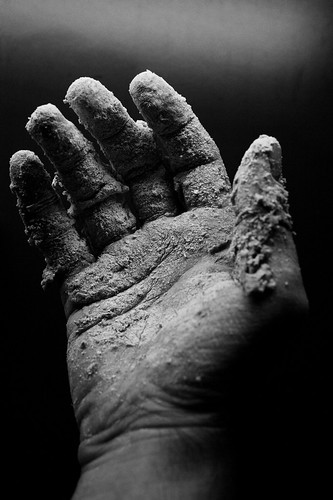 The story of the Self-Made Man is summed up simply in the epithet "from rags to riches," but there are in fact two versions of this mythic figure. In one, the Self-Made Man is a simple, humble, hard-working guy who has always believed himself to possess a special gift, talent, skill or idea that he wants to share with the world. Often, this person must struggle against obscurity, inherited poverty and other kinds of set-backs and stumbling blocks before his gift is revealed to the world and he is justly rewarded with wild financial success. This Humble Worker version of the hero rarely has aspirations to wealth, but is more often portrayed as uniquely devoted to the qualitative contribution he can make to his community. He is akin to the hero of ancient myths (such as Perseus or Cu Chulainn) who, though born of the gods and privileged with unique gifts and abilities, does not spend much of his time concerning himself with the gods directly but goes off to make his own way in the world. The archetypal model of this version of the Self-Made Man reflects the common belief that "if you just work hard enough, eventually you'll get your lucky break."
The other version of the Self-Made Man begins much the same way — with someone of humble, lower class origins — but it differs in the story it tells of success. While the Humble Worker plugs away, earning his success on the Market's own terms, the Fire Thief defies the standard rituals and precepts of his gods and goes directly after the power and privileges that they possess, intent on bringing them back to his community or keeping them for his own personal glory. This is the entrepreneur who risks everything on an uncertain business venture and, against all expectation, succeeds; or the musician who quits his day-job to play guitar and ends up with several platinum records and a fanclub of millions. The Fire Thief rejects the standard security of the 9-to-5 job and the corporate ladder, and either earns respect or steals success from the Market through his cunning and bravado. Yet it is understood that most who attempt such rashness fail miserably and suffer the consequences of their disobedience.
These archetypes of the Self-Made Man (and the male emphasis is intentional, for even women are expected to conform to the masculine elements of the mythology in order to succeed) are found pervasive throughout modern society. J.K. Rowling exemplifies the first, the Humble Worker, who might have continued to struggle with depression and poverty had not the Market smiled upon her and brought her work to light. Bill Gates can be cited as an example of the Fire Thief, the unlikely nerd working out of his garage and suddenly rising to obscene wealth and a global monopoly, so powerful and yet so benevolent now that he gives millions of dollars to aid the less fortunate and even has designs on controlling the weather. No one single living person might perfectly embody the Hero in all his aspects, but there are enough familiar, living examples of "rags to riches" stories that, together, they seem to offer convincing evidence that this myth is not just a metaphor, but a reality that can be enacted.
Prophets, Priests and Politicians
In any mythology, eventually the gods — in their power and ineffability — may need to enlist the help of prophets and priests to communicate their esoteric demands to the common-folk, the laity. Priests organize and lead the ritual acts of the community, while prophets come to the forefront as society begins to lose faith in the efficacy or benevolence of its gods as a result of social turmoil, upheaval or rapid change. Traditionally, political leaders ask for the blessings and heed the advice of priests and prophets alike, though at times prophets who offer unpopular or inconvenient ideas may be ostracized or condemned for a time, before eventually being vindicated.
In the mythology of the Market, economists, intellectual pundits and CEOs most often play the role of the priest, acting as an intermediary between the Market and the community, interpreting the god's needs and moods, recommending which ritual acts — tax cuts, bail-outs, consumer spending, etc. — will appease it, which will avert disasters and which will cause them. For a time, a Market-priest may grow to such prominence that his pronouncements are taken as practically infallible; such was the role that Alan Greenspan played for the past two decades as Chairman of the Federal Reserve, his blessings sought by each new president during this time as kings used to seek blessings for their legitimacy from the Pope.
In times when the priests of the Market fail to accurately predict its demands and reactions, faith in its benevolence (though not in its existence) may begin to waver. Up step the prophets, then, with their unique insight into the workings of the mythologies, and sometimes with warnings of doom for those who lose their way. The social stirrings caused by colonialism and the scientific revolution that laid the foundation for the industrial revolution in later centuries also set the stage for political philosophers like John Locke, Adam Smith and Thomas Hobbes, some of the most influential prophets of the Market mythology. These philosophers first articulated versions of the Creation Myth of modern capitalism, as well as laying out a theology of practice still referenced today. The industrial revolution itself led to great social upheavals and sometimes great suffering, making the prophesying of Karl Marx and the advent of communism almost inevitable.
Even Marx, however, does not challenge the existence of the Market, and in fact founds his entire philosophy on the supreme importance of economics. The difference is, in his interpretation, the capitalist Market ceases to be a god worthy of worship and becomes instead a dragon which the downtrodden workers have had to appease with virgin sacrifices for far too long. The hero of Marxist communism is neither the Humble Worker nor the Fire Thief, but the Dragon Slayer. This hero arrives suddenly, and bravely comes to the aid of the harassed village, intent on killing the monstrous beast and freeing the villagers from their burden. From within our modern mythological worldview, the collapse of the Soviet Union eventually proved Marx and his followers as false prophets who failed to understand the true nature of the Market and led many believers and especially political leaders astray. The end of the Cold War is now commonly attributed not primarily to Western military might, but to its commitment to capitalism and freedom (as defined largely in terms of consumerism and the free market).
Heresy & Iconoclasm
In some respects, heresy cannot exist until there are priests and prophets within a mythological tradition outlining and codifying some kind of agreed-upon canon. Pre-Christian pagan traditions in Britain, for instance, were not considered heretical by the Church; but the various early gnostic sects were, as were reemergent pagan aspects within the Church once Christianity had moved in and established its hold. When it comes to the Mythology of the Market, Marx is an excellent example of a heretic according to the dominant capitalist worldview, for he disputes some fundamental assumptions about the purpose and proper relationship of individuals to the Market, but he does not reject the most basic premise of the mythos: that the Market is the primary and essential way in which we should understand human social relationship (and possibly the meaning of human life in general).
We are ourselves currently so entrenched in the modern Market mythos, however, that it is incredibly difficult, perhaps even impossible, to disagree with the established canon without becoming merely heretical. When we disagree with certain consequences or implications of the mythology of the Market, our usual response is to begin tweaking. We work backwards from obvious flaws and failures until we find ways of changing some minor aspect of our mythology without challenging its fundamental premises about the world and how it works. Even when we ascribe to some other supposed mythos about these fundamental premises, we often find that we live our lives according to the mythology of the Market and make room for these other worldviews only as far as they do not conflict.
This seemed to be the case with many Catholics I knew growing up, who attended church on Sundays and thought it all very well and good to speak of charity and the Law of Love during Mass, but who would never have dreamed of taking seriously Jesus' and the early Christians' injunctions against wealth and private possessions in favor of simple communal living. Jesus' own advice to "render unto Caesar what is Caesar's" has been giving Catholics a pass on fully integrating their spiritual and political lives for centuries, so it's not fair to blame modern culture alone for this attitude. More uniquely modern, however, is the development of the Prosperity Gospel, preached especially among televangelists, which seeks to wed Christianity explicitly with the Market mythology in order to ease tensions between the two. In either case, it's difficult to find someone who has accepted and taken seriously the worldview of Christianity in a complete and consistent way, who has not also come into a fundamental conflict with the prevailing myth of the Market.
I believe that this is true of any alternative mythological worldview, including that potentially offered by Paganism. When it comes to the Market, most Pagans are at best merely heretics, struggling valiantly to revise their understanding of consumer capitalism to make it compatible with or at least not painfully contradictory to their concerns for the environment and their appreciation of ancient myths from a pre-Market time. Shopping at eco-friendly stores and utilizing the propagandists of the advertising industry in order to promote "green" living and earth-centered fashion trends are only two examples of this uneasy relationship. The truth is that a consumer-based culture will never fully embrace, support or promote a message of drastically reduced consumption; it will at best find ways to make consumption more efficient so that it can continue to put off any negative ramifications. This is in no way meant to suggest Pagans are any more culpable for the many contradictions of modern Market-embedded environmentalism as anyone else, of course.
Which brings me back, in a round about way, to the G20 and its protests. I suspect that the reason locals are so antagonistic towards and dismissive of protesters is that in most respects they view them merely as heretics, trouble-makers who have no fully integrated, coherent worldview of their own to offer but merely a jumbled collection of complaints and objections about how "life isn't perfect" (to which the humble, hard-working Ordinary Guy replies, "no shit, get over it"). In some instances, this may be an inaccurate and unfair view of the protesters, but it's not unexpected. When we are deeply involved in living out or enacting the story told by the predominant mythology of our culture, it is practically inconceivable that others might completely reject or denounce this worldview. This is precisely because we do not see it as a mythos or worldview at all, but as reality. We are likely to consider those who reject our mythology as quite literally denying or rejecting reality itself; that is, we're likely to view them as insane, and thus unpredictable and potentially even dangerous. Hence all the hype and security measures to protect the city from the influx of unpredictable and unreasonable protesters, "anarchists and other self-described 'anti-authoritarians,'" as one newspaper article puts it.
On the other hand, it is likely that most of these protesters are themselves still enacting, in one way or another, the mythology of the Market as they've known it and lived it all their lives. Their chosen public actions, such as boycotting various businesses and disrupting ordinary consumer activities, belies a continuing emphasis on the Market as the primary definition of socio-cultural relationship and power. In this sense, the protesters are participating in acts of iconoclasm, in which members from within a given culture destroy that culture's religious symbols and images for the purposes of making a religious or political statement.
I do not want to go so far as to suggest that the protests of the G20 are utterly useless, though I expect that in most ways they will remain essentially an ineffective spectacle serving mostly as media fodder. There was a time when, despite the apparent futility and self-contradictions, I would still have been out there myself marching and hoisting signs above my head — not because these acts are themselves revolutionary, but because they are symbols of solidarity and hope, a demonstration that, yes, I too recognize that there is something out of balance and unjust in the way we are living and this needs to change. These demonstrations are important and they serve a purpose. But so too do the quiet poets and dreamers and lovers who are wandering in the deep and intimate work of creating an alternative mythology, who are listening intently to the natural world and its mysteries, and discovering new stories to enact. This work too is absolutely vital if we are to overcome the domineering Mythology of the Market. And I know my strengths and my passions well enough to know that my place is here, watching the setting moon and searching for words in the silence, and not out on the streets amidst the noise of protestation.
At least, for now...
Image attribution:
Heroes of Market Mythology: The Humble Worker & The Fire Thief
The mythology of the Market, like any thriving mythological worldview, has its heroes who exemplify the ideal relationship that man can hold in relation to his gods. The myth of the Self-Made Man is the best example of such a hero in modern Market mythology, and it is familiar to almost anyone who aspires to succeed in the world of the Market today.
The story of the Self-Made Man is summed up simply in the epithet "from rags to riches," but there are in fact two versions of this mythic figure. In one, the Self-Made Man is a simple, humble, hard-working guy who has always believed himself to possess a special gift, talent, skill or idea that he wants to share with the world. Often, this person must struggle against obscurity, inherited poverty and other kinds of set-backs and stumbling blocks before his gift is revealed to the world and he is justly rewarded with wild financial success. This Humble Worker version of the hero rarely has aspirations to wealth, but is more often portrayed as uniquely devoted to the qualitative contribution he can make to his community. He is akin to the hero of ancient myths (such as Perseus or Cu Chulainn) who, though born of the gods and privileged with unique gifts and abilities, does not spend much of his time concerning himself with the gods directly but goes off to make his own way in the world. The archetypal model of this version of the Self-Made Man reflects the common belief that "if you just work hard enough, eventually you'll get your lucky break."The other version of the Self-Made Man begins much the same way — with someone of humble, lower class origins — but it differs in the story it tells of success. While the Humble Worker plugs away, earning his success on the Market's own terms, the Fire Thief defies the standard rituals and precepts of his gods and goes directly after the power and privileges that they possess, intent on bringing them back to his community or keeping them for his own personal glory. This is the entrepreneur who risks everything on an uncertain business venture and, against all expectation, succeeds; or the musician who quits his day-job to play guitar and ends up with several platinum records and a fanclub of millions. The Fire Thief rejects the standard security of the 9-to-5 job and the corporate ladder, and either earns respect or steals success from the Market through his cunning and bravado. Yet it is understood that most who attempt such rashness fail miserably and suffer the consequences of their disobedience.
These archetypes of the Self-Made Man (and the male emphasis is intentional, for even women are expected to conform to the masculine elements of the mythology in order to succeed) are found pervasive throughout modern society. J.K. Rowling exemplifies the first, the Humble Worker, who might have continued to struggle with depression and poverty had not the Market smiled upon her and brought her work to light. Bill Gates can be cited as an example of the Fire Thief, the unlikely nerd working out of his garage and suddenly rising to obscene wealth and a global monopoly, so powerful and yet so benevolent now that he gives millions of dollars to aid the less fortunate and even has designs on controlling the weather. No one single living person might perfectly embody the Hero in all his aspects, but there are enough familiar, living examples of "rags to riches" stories that, together, they seem to offer convincing evidence that this myth is not just a metaphor, but a reality that can be enacted.
Prophets, Priests and Politicians
In any mythology, eventually the gods — in their power and ineffability — may need to enlist the help of prophets and priests to communicate their esoteric demands to the common-folk, the laity. Priests organize and lead the ritual acts of the community, while prophets come to the forefront as society begins to lose faith in the efficacy or benevolence of its gods as a result of social turmoil, upheaval or rapid change. Traditionally, political leaders ask for the blessings and heed the advice of priests and prophets alike, though at times prophets who offer unpopular or inconvenient ideas may be ostracized or condemned for a time, before eventually being vindicated.
In the mythology of the Market, economists, intellectual pundits and CEOs most often play the role of the priest, acting as an intermediary between the Market and the community, interpreting the god's needs and moods, recommending which ritual acts — tax cuts, bail-outs, consumer spending, etc. — will appease it, which will avert disasters and which will cause them. For a time, a Market-priest may grow to such prominence that his pronouncements are taken as practically infallible; such was the role that Alan Greenspan played for the past two decades as Chairman of the Federal Reserve, his blessings sought by each new president during this time as kings used to seek blessings for their legitimacy from the Pope.
In times when the priests of the Market fail to accurately predict its demands and reactions, faith in its benevolence (though not in its existence) may begin to waver. Up step the prophets, then, with their unique insight into the workings of the mythologies, and sometimes with warnings of doom for those who lose their way. The social stirrings caused by colonialism and the scientific revolution that laid the foundation for the industrial revolution in later centuries also set the stage for political philosophers like John Locke, Adam Smith and Thomas Hobbes, some of the most influential prophets of the Market mythology. These philosophers first articulated versions of the Creation Myth of modern capitalism, as well as laying out a theology of practice still referenced today. The industrial revolution itself led to great social upheavals and sometimes great suffering, making the prophesying of Karl Marx and the advent of communism almost inevitable.
Even Marx, however, does not challenge the existence of the Market, and in fact founds his entire philosophy on the supreme importance of economics. The difference is, in his interpretation, the capitalist Market ceases to be a god worthy of worship and becomes instead a dragon which the downtrodden workers have had to appease with virgin sacrifices for far too long. The hero of Marxist communism is neither the Humble Worker nor the Fire Thief, but the Dragon Slayer. This hero arrives suddenly, and bravely comes to the aid of the harassed village, intent on killing the monstrous beast and freeing the villagers from their burden. From within our modern mythological worldview, the collapse of the Soviet Union eventually proved Marx and his followers as false prophets who failed to understand the true nature of the Market and led many believers and especially political leaders astray. The end of the Cold War is now commonly attributed not primarily to Western military might, but to its commitment to capitalism and freedom (as defined largely in terms of consumerism and the free market).
Heresy & Iconoclasm
In some respects, heresy cannot exist until there are priests and prophets within a mythological tradition outlining and codifying some kind of agreed-upon canon. Pre-Christian pagan traditions in Britain, for instance, were not considered heretical by the Church; but the various early gnostic sects were, as were reemergent pagan aspects within the Church once Christianity had moved in and established its hold. When it comes to the Mythology of the Market, Marx is an excellent example of a heretic according to the dominant capitalist worldview, for he disputes some fundamental assumptions about the purpose and proper relationship of individuals to the Market, but he does not reject the most basic premise of the mythos: that the Market is the primary and essential way in which we should understand human social relationship (and possibly the meaning of human life in general).
We are ourselves currently so entrenched in the modern Market mythos, however, that it is incredibly difficult, perhaps even impossible, to disagree with the established canon without becoming merely heretical. When we disagree with certain consequences or implications of the mythology of the Market, our usual response is to begin tweaking. We work backwards from obvious flaws and failures until we find ways of changing some minor aspect of our mythology without challenging its fundamental premises about the world and how it works. Even when we ascribe to some other supposed mythos about these fundamental premises, we often find that we live our lives according to the mythology of the Market and make room for these other worldviews only as far as they do not conflict.
This seemed to be the case with many Catholics I knew growing up, who attended church on Sundays and thought it all very well and good to speak of charity and the Law of Love during Mass, but who would never have dreamed of taking seriously Jesus' and the early Christians' injunctions against wealth and private possessions in favor of simple communal living. Jesus' own advice to "render unto Caesar what is Caesar's" has been giving Catholics a pass on fully integrating their spiritual and political lives for centuries, so it's not fair to blame modern culture alone for this attitude. More uniquely modern, however, is the development of the Prosperity Gospel, preached especially among televangelists, which seeks to wed Christianity explicitly with the Market mythology in order to ease tensions between the two. In either case, it's difficult to find someone who has accepted and taken seriously the worldview of Christianity in a complete and consistent way, who has not also come into a fundamental conflict with the prevailing myth of the Market.
I believe that this is true of any alternative mythological worldview, including that potentially offered by Paganism. When it comes to the Market, most Pagans are at best merely heretics, struggling valiantly to revise their understanding of consumer capitalism to make it compatible with or at least not painfully contradictory to their concerns for the environment and their appreciation of ancient myths from a pre-Market time. Shopping at eco-friendly stores and utilizing the propagandists of the advertising industry in order to promote "green" living and earth-centered fashion trends are only two examples of this uneasy relationship. The truth is that a consumer-based culture will never fully embrace, support or promote a message of drastically reduced consumption; it will at best find ways to make consumption more efficient so that it can continue to put off any negative ramifications. This is in no way meant to suggest Pagans are any more culpable for the many contradictions of modern Market-embedded environmentalism as anyone else, of course.
Which brings me back, in a round about way, to the G20 and its protests. I suspect that the reason locals are so antagonistic towards and dismissive of protesters is that in most respects they view them merely as heretics, trouble-makers who have no fully integrated, coherent worldview of their own to offer but merely a jumbled collection of complaints and objections about how "life isn't perfect" (to which the humble, hard-working Ordinary Guy replies, "no shit, get over it"). In some instances, this may be an inaccurate and unfair view of the protesters, but it's not unexpected. When we are deeply involved in living out or enacting the story told by the predominant mythology of our culture, it is practically inconceivable that others might completely reject or denounce this worldview. This is precisely because we do not see it as a mythos or worldview at all, but as reality. We are likely to consider those who reject our mythology as quite literally denying or rejecting reality itself; that is, we're likely to view them as insane, and thus unpredictable and potentially even dangerous. Hence all the hype and security measures to protect the city from the influx of unpredictable and unreasonable protesters, "anarchists and other self-described 'anti-authoritarians,'" as one newspaper article puts it.
On the other hand, it is likely that most of these protesters are themselves still enacting, in one way or another, the mythology of the Market as they've known it and lived it all their lives. Their chosen public actions, such as boycotting various businesses and disrupting ordinary consumer activities, belies a continuing emphasis on the Market as the primary definition of socio-cultural relationship and power. In this sense, the protesters are participating in acts of iconoclasm, in which members from within a given culture destroy that culture's religious symbols and images for the purposes of making a religious or political statement.
I do not want to go so far as to suggest that the protests of the G20 are utterly useless, though I expect that in most ways they will remain essentially an ineffective spectacle serving mostly as media fodder. There was a time when, despite the apparent futility and self-contradictions, I would still have been out there myself marching and hoisting signs above my head — not because these acts are themselves revolutionary, but because they are symbols of solidarity and hope, a demonstration that, yes, I too recognize that there is something out of balance and unjust in the way we are living and this needs to change. These demonstrations are important and they serve a purpose. But so too do the quiet poets and dreamers and lovers who are wandering in the deep and intimate work of creating an alternative mythology, who are listening intently to the natural world and its mysteries, and discovering new stories to enact. This work too is absolutely vital if we are to overcome the domineering Mythology of the Market. And I know my strengths and my passions well enough to know that my place is here, watching the setting moon and searching for words in the silence, and not out on the streets amidst the noise of protestation.
At least, for now...
Image attribution:
Thursday, May 21, 2009
Angels, Demons & Old Men in Bathrobes
 Walking home from the movie theater just now--beneath the glorious sun filtering down through the overlapping translucent dark-veined jade of a thousand leaves exhaling praise for root, water and earth towards the endless cloudless cerulean sky--I couldn't help but admit to myself that I have a deeper anger with the Catholic Church than I'm usually willing to acknowledge.
What else could explain the tears of relief? Quickly blinked away, of course, but still. When that bomb of antimatter exploded miles above the Vatican, and the walls themselves which men had made, the sculpted columns and stone angels, the repressive brick and dusty mortar, trembled to their very foundations and almost fell.... there were tears of relief in my eyes. I almost cried, watching a Dan Brown movie. Starring Tom Hanks. Of all the ridiculous things!
But this morning started out poorly, when it comes to the Church. The report released yesterday about the thousands of cases of child abuse in Ireland, actively covered up by this corrupt and decrepit institution, was weighing heavily on my heart, as was the continuing controversy about the Frosts mentioned in T. Thorn Coyle's blog recently. What we human beings sometimes do out of a sense of tradition and institutional order. The day was already hot by the time I left my apartment for lunch, and I wanted nothing more than to be somewhere dark and cool for a little while, somewhere where I might find an hour or two of relief from grief and that creeping feeling of helplessness. I walked past the movie theater on my way to the vegan restaurant and noticed they were showing "Angels & Demons," the new film based on Dan Brown's prequel novel to The Da Vinci Code. I decided to catch the 2:50 PM show. Why? Because I'm a fan of Dan Brown and his work? Certainly not. Frankly, I think his writing is irritatingly trite, his plots contrived (seriously, the butler did it? that's your surprise ending?), and his "puzzles" obvious; not to mention his terrible disregard for even basic historical research. (Before you object that "it's just fiction!" let me say this: there is no reason why good, well-written fiction can't also include accurate information about the histories and mythologies it invokes and portrays.) So, why see this new movie, then? F**k the Catholic Church, that's why.
To be fair, the movie was quite passable as entertainment. Happily, I know absolutely nothing about the Illuminati legends the plot centered on, and so I wasn't tortured by the constant interruption of my academic background in comparative religious studies about the rampant inaccuracies and misinformation (as I had been when I read The Da Vinci Code several years ago). I was just another ignorant movie-goer, enjoying a hot afternoon in the air-conditioned theater, munching on my Junior Mints and sipping my Pepsi, indulging myself. Sweeping camera shots of Vatican city and the breath-taking architecture of the chapels and cathedrals dotting the maze of streets had me aching to travel to Europe. To see history. Real history, not the fledgling kind we have here in the United States. Thousands of years of history, thousands of years of humanity thriving and writhing, moving and breathing and living together, building things and tearing them down again, rejecting and incorporating bits and pieces of the past into the ever-evolving mishmash of the present. The setting alone was worth the six dollars. Well, that and Ewan McGregor in a priest's collar.
Still, the ending left me disappointed. (For those of you concerned about spoilers, skip the rest of this paragraph.) I was grateful that the Illuminati threat turned out to be an elaborate ploy of the real antagonist, intentionally playing on the fears of the Catholic Church to throw off suspicion. Yet there was something about the noncommittal twist revelation that left me cold: no, there was no institutional conspiracy, just a single man, one crazy extremist. The Church was flawed but well-intentioned after all, and all those creaky old men in their lace bathrobes and slippers were justified in the end.
But the truth is... those same creaky old men are the ones who, in real life, sit comfortably behind their gold-adorned doors, shuffling papers and blocking investigations into abuse scandals. They are the ones who, when electing a new pope in real life, chose a man known for his theological rigidity more than his ecumenical openness, a man who has gone on to pronounce statements of dismissal and intolerance against several of the world's religions, a man who has retracted and undermined most of the progress made since Vatican II towards more inclusive, feminist language and symbolism within Church writings and ritual. The truth is, it takes no crazy extremist kidnapping cardinals and calling in bomb threats in the name of strengthening the Church; the men who justify child abuse and corruption for the sake of the institution appear mild and innocuous, doddering old men in bathrobes and funny hats. Movies like "Angels & Demons" play on the flash and flair of the single maniac, when the truth is much more subtle, much more insidious.
The funny thing is, for a long time I was the first one to speak up, to defend organized religion and even the Catholic Church itself against my more vehement atheist friends. I understood the metaphor of the garden lattice screen, offering a basic support over which the organic life of the spiritual laity could grow. I appreciated and admired the complex mythologies, art and ritual of organized religion; really, I still do. I tried for a long time to be a "good Catholic" as well as a good follower of Christ, a good Druid, a good person. But the grief and pain of disjoint and contradiction weighed too heavily. How could I remain part of the Church, how could I intentionally choose to be a member of a religion that rejected me, rejected my calling because of my gender, and rejected my basic sense of decency in the name of some greater need for institutional preservation? How could anyone knowingly choose that?
 Walking home from the theater, breathing in sunlight and the sighs of trees, I kept thinking that the Catholic Church has so little faith in the God they claim to worship, and so little faith in us. I found myself pleading--with the Church, with myself, with all of us--to trust. Trust. Trust in human beings to preserve that which is good and beautiful and meaningful, trust in Spirit to work its own way out in the hearts and minds of people living their lives with love and kindness and hope. Trust that huge, sprawling, stagnant institutions are not necessary, and never have been, that they cannot protect us and they rarely serve anyone but themselves. The world is so beautiful, messy and wild and utterly full of light, and we all seem to spend so much time trying to build up walls that shield us from that understanding. If only we could find it in ourselves to trust, to let go a little more, to relinquish our need to control and to be certain. If we could admit to our mistakes, our flaws and our abuses, instead of pushing them off on others or striving to conceal them. If we could trust ourselves and each other to be strong enough to face a world untamed by institution and authority, if we could pull down our own idols of power and remember instead our empathy for the disenfranchised, the impoverished and the suffering. If only... if only....
...
My father called just now as I was writing. He is a good person, a loving, gentle man and a supportive father; he's also Catholic, born and raised. I asked him what he thought of these abuses, about the cover-ups and reluctant apologies that come only long after denial and obfuscation have ceased to be an option. He grew quiet, almost bashful, and could only say, sadly, that it was something he had to deal with, that he had worked through his own anger about it, and that it helped to remember it was only a few, not everyone in the Church, not even the vast majority. Then, he put my mother on the phone, who warned me against my "judgmental tone." But this is not judgment--this is my expression of sorrow and anger, and I cannot apologize for it.
What sorrows me deeply is not that the whole of Catholicism is corrupt and misguided. There is so much good there, really, in its mythologies, its rich art and music, in its Mysteries and in the good, kind people who live peacefully and decently in their own ordinary ways. What grieves me is precisely that such abuse and suffering are caused by a few, a few men with power, who then use the goodness and kindness of others as a justification and a shield to hide behind. What confuses me is why, in the face of such corruption, that kind and decent vast majority doesn't rise up in angry protest and denounce and reject and rebuild anew, rather than shuffling their feet and submitting passively to the whims of its leaders. This is the downfall of hierarchy: that nothing will change simply because the majority hopes and prays and wishes for change. This is not a democracy: the laity doesn't get a vote, they do not have a voice. And while there are many ways to respond to and address the corruption of those in power, I cannot see my way to the choice made by so many, to remain silent and sad instead of taking action. I wish I could better understand them, but I have made my choice, the only one I felt I could make in keeping with my conscience: I chose to leave.
And in some ways, I know that inside of me is still an angry child raging against a parent Church that, in a time of most pressing need, turned away and chose the selfishness of self-preservation over the love and acceptance it had always promised. That gave me no choice but to leave, to strike out on my own. The child in me is angry and sniffling back her tears, and squaring her shoulders, and promising to herself that she will be stronger for it, that she will face the world with courage even in her solitude, and grow up to be the kind of woman who will not turn her back on those in need.
Subscribe to:
Posts (Atom)