Monday, March 31, 2008

A Fool's Chance: Coincidence & Magic

[What follows is an open letter to deò and Mandy, about the most recent episode of their podcast deò's Shadow. In it, they talk about science, skepticism and, towards the end of the program, how this all relates to an understanding of magic (you can listen to the episode here). Talk about coincidence! Here, my recent debates with scientific atheists crash head on with an on-going discussion in the AODA online forum about definitions of magic. Enjoy.]


deò,

Just listened to the latest deò's Shadow episode and in particular your essay on magic, and found it fascinating! I've gotten myself into quite a few... "heated discussions" with scientific atheists lately, and because of this I've been exploring more deeply exactly where the materialist worldview conflicts with my own perspective, which has always been shaped both by a sense of the spiritual and by a highly aesthetic sense. What I keep coming back to is this distinction between science as a method, and science as an ideology or philosophical system. The point made about quantum mechanics by the physicist earlier in the show is something that applies to almost all aspects of science on a most basic level: even the most thorough and reliable scientific theories are merely refined ways of predicting causes and their related effects, i.e. ways of describing reality and, more specifically, material, physical, measurable reality. (You made this point in your essay on magic, as well.)

We get into trouble when we start assuming, firstly, that an expertise in a particular scientific field inherently translates into an expertise in all other fields and areas of knowledge. This is why people like Richard Dawkins drive me crazy! Most scientists would not assume that being knowledgeable in evolutionary biology qualifies you to talk authoritatively about, say, spectroscopy or electron paramagnetic resonance, and yet for some reason many of them assume that such a knowledge does qualify one to speak authoritatively on cultural or religious movements and phenomena, with which they usually have only a passing and shallow familiarity. But I'm getting off track. My point is that there are certainly different kinds of "knowledge," and the study of material cause-and-effect can often miss the mark when applied to social and cultural phenomena. We also run into trouble when, as that physicist earlier in the show mentioned, we begin to speculate about the various metaphysics that might explain the equations and scientific laws without realizing that this is what we're doing. At this point, we can confuse the difference between those theories and descriptions of reality that science brings to light, with the philosophical extrapolations we make based on those findings, and that's when science goes from being a method to being an ideology. Science as an ideology is the belief that the scientific method of understanding reality (i.e. the material, measurable, verifiable approach to reality) is the best and perhaps the only way to gain any useful or relevant knowledge about the world and about ourselves.

But even without resorting to the more obvious exception of spiritual beliefs, we already see that science isn't always the best way to approach cultural or emergent social phenomena. For me, another hugely important exception to a scientific ideology is art and aesthetics. We do not need to believe in any nonmaterial realm whatsoever--we can be complete materialist atheists, in fact--and still see that a work of art has certain experiential qualities that cannot be measured, quantified or (and this is key) repeated in a controlled setting so as to verify their reality empirically. My experience of a painting or piece of music, for example, will be uniquely my own and different from that of my friend's, even when my friend and I can agree about certain basic aspects of that experience. Furthermore, every time we approach a given painting will be a new experience itself, different from our previous experiences (e.g. each new approach will be in a different time, perhaps in a different place, and we will have changed and grown in the meantime). There is simply no way to guarantee that each person's aesthetic experience will be the same as another's or consistent throughout time without imposing a certain control or reductionist approach to the work of art that actually robs it of that very aesthetic nature we were hoping to pin down. And yet I think we can agree that engaging a work of art is a meaningful and even an informative experience, one that can highlight ideas or understandings about the world that are very different from the kind of knowledge gained through the scientific method, but which are still useful and relevant for us as human beings.

What does all of this have to do with magic? For me, I have always found it most useful to approach an understanding of magic beginning from a perspective on aesthetics. I may be biased, of course, since I first was drawn to magic and personal ritual as an extension of creative activity into a more spiritual context--but I still think that this approach can provide a useful alternative to trying to argue about magic using science's own language. The language of scientific method is, after all, not the only language available, and not always the best or most practical! For myself, I like to think of magic as "turning the wheels of coincidence." I'm rather fond of this definition because for me it connects back to the idea that magic is not "supernatural" but ultimately natural, a manifestation or emergent phenomenon of all the myriad forces and energies working and bumping into one another, but one that also requires the freedom of chance, uncertainty and creative choice. Even the strictest determinists can't seem to get away from the assumption that we human beings do have creative choice and that the actions we choose to pursue can affect the world, and they act on this assumption even when speaking officially against it (after all, why would the determinists bother to write their books trying to convince the rest of us of the truth of determinism, if they didn't think such an act of intention would make a difference? Silly determinists.) The idea of coincidence, while not rejecting anything that science has to offer, belies the assumption that the best way we can gain knowledge about the world is by subjecting it to controlled conditions within which we can measure it. Instead, it suggests that we can also understand the world, first by paying attention to how things occur as they occur naturally (i.e. attending to and taking seriously our own experiences of the world just as they're happening), and then by participating in and shaping these goings-on in a meaningful way.

This brings me to the inherent relationship between magic and the act of meaning-making. Creating or imagining meaning is a way of participating in the "goings-on" by bringing order and significance to what can be an overwhelmingly complicated world, and it's an activity that we, as self-aware creatures, engage in almost automatically on a daily basis. It is also a fundamental aspect of aesthetics. When creating works of art, the artist utilizes media that are, in themselves, perfectly mundane and "natural." But by attending to the unique potential for communication and expression inherent within a given medium, the artist can creatively shape that material into a work that opens the door to infinite new experiences that are ever-evolving and ever-revealing or -inspiring in their meaning. I think magic does precisely the same thing: it is really a kind of aesthetic activity, a work (or working) of art, which brings seemingly disparate, non-utilitarian or coincidental actions, materials and events together in ways that inspire, engage, enlighten, enchant, and/or fulfill a need for connection or meaningfulness, in line with a particular intention.

Whereas the artist's medium might be paint and canvas, stone or clay, sound, language or even the human body itself, the practitioner of magic works with chance and coincidence themselves as media for meaning-making. Ritual activity, the symbolism and correspondences of mythology, folklore, and psychological archetypes, and even works of art like music, dance and poetry then become a means by which the mage participates in the shaping of coincidence. They are the tools a mage uses to shape coincidence in the same way that a guitar is the tool a musician uses to shape sound, and the means by which he or she creates song as an experiential work of art--and yet the guitar is obviously not the same thing as the song, and it can be played poorly so as to undermine the creative activity of making music (just like a spell or magical working can be performed in a hokey or ineffectual manner). In some sense, then, when a musician performs, she is not only creating music as an aesthetic work, but also creating a kind of magic. She "turns the wheels of coincidence" by transforming a crowd of strangers into an audience sharing an intimate, communal experience of song: her intention to play manifests as a bunch of random people all gathering in the same place at the same time, and the activity of her playing is the act by which their presence is rendered meaningful and not merely coincidental. The music she performs is an aesthetic experience itself, but the social and cultural experience of the audience moves beyond this experience, though it is shaped and influenced by it in very clear ways. A practitioner of magic does much the same thing: creating, exploring and influencing reality and our experience and understanding of that reality.

I know that much of this might sound like a whole lot of mumbo-jumbo, especially these days when it seems like the creative activity of meaning-making is often dismissed as "making things up" or "seeing connections that aren't there" or aren't real ("not real" according, again, to the scientific standard of what is measurable and repeatable). As you mentioned, those very same cultures that we accuse of being "superstitious" were also very often rich, colorful and enchanting. I think perhaps this is because, superstitions aside (what is superstition, after all, but an attempt to overcome ignorance or a lack of knowledge?), such peoples were well practiced in the art of making meaning, of creating significance and depth out of the random flux of the everyday. If we step into the role of self-aware and intentional "makers of meaning," whether through art or magic, or both--if we accept the responsibility of our creative potential and work to deepen and "re-enchant" the world and our experience of it, informed now by science but not over-burdened or constrained by it--if we do this... well, I'm not sure what would happen, honestly. But I'd love to find out!

--Ali

Sunday, March 30, 2008

A Day in the Life, A Fountain in the Grass

I had the most curious sensation walking home from work today. Let me say first that it was a rough day, generally. We were understaffed, with one manager out sick leaving only one to run the restaurant, and since the weather is gorgeous, we were almost guaranteed to get slammed for brunch--which we did. Since I was one of the stronger servers on the floor, I spent a lot of my day helping other people run their food, get drinks, prep sides, wrap silverware and generally keep the back station and pantry area clean.

I'm not bragging; this is part of my job. I think everyone should have to wait tables at least once in their life, particularly at a family diner like the one I work at, just so they have some appreciation for how much side work servers are expected to juggle, all the while staying cheery and attentive to their customers--it isn't easy, it takes a certain knack. And a certain roll-with-it attitude. As I've said before, sometimes you can get into a groove where it's almost like a dance, and I smile to myself to know how well high school marching band taught me to make back steps and pivot turns with the grace and control to keep my gait smooth and my upper body perfectly steady. So the act of serving itself can be engaging, a kind of secular ritual of attention, care and movement. On good days. But sometimes, it just wears you into the ground, and it's hard not to feel angry or bitter about rude or manipulative customers or (especially) coworkers clearly out to cut every corner possible, regardless of who gets screwed. Usually my coworkers are pleasant and, if not hard-working all the time, at least competent and... adequate. Realy, that's supposed to be a compliment! After all, it is only a crappy waitressing job--I can't expect everyone to seek some kind of philosophical appreciation or esoteric fulfillment from it.

But today, I had a rough day--one of those days when I felt horribly under-appreciated by coworkers and management in general. It happens. Usually I can shrug it off, but I'm exceptionally worn down lately, my nerves a bit raw. I'm only human. So, at the end of my shift, when my clean-up was all but done and I was waiting for my last table to finish their desserts, I stepped outside. There's a little space out back where people go for quick cigarette breaks, but since I don't smoke, I rarely have an excuse to step outside for some fresh air. With this brief respite, though, I decided to go and sit on the stoop in the sun, even if I didn't have a cancer-stick between my fingers to justify the moment. I let the warm sunlight seep into my skin while the fresh breeze dried some of the literal sweat from my brow (not to mention cool my flushed-with-frustration cheeks). In only a few minutes, I felt much better. Almost happy again, or at least able to smile and relax, find my center and a calmer perspective. It's taken me a long time, but I've finally reached that point in my life when contentment is my "idle mode." If nothing is provoking me or proving particularly frustrating, I carry around a secret, private gratitude for life in all its messy glory and numerous manifestations. And it's self-feeding and regenerating, because I have enough self-awareness to know this wasn't always the case--so these days, I'm just grateful to feel so grateful.

So that was that moment, a moment in sunlight (tarred lungs not included). Then I went back inside, finished my work, clocked out and began the walk home. Once back inside, that baseline of gratitude had begun to waver a bit again, and I was very happy to be on my way back to my little apartment (where cookies and milk, not to mention some old Star Trek episodes, were waiting for me: a Treat to Myself). As I walked, I passed one of the old sycamore trees that line the streets of this neighborhood and was reminded of just how much that particular tree's lumpy bark sometimes looks like a grizzled, friendly face peering out at the world, watching all the dogs and neighbors walk by. Then up the block a little ways, I passed the house with the stonewall along the garden's edge, and the one rock slightly out of place that looked sort of like a crouching, spotted toad. These familiar bits of scenery got me thinking about some of the books I've been reading about nature spirits and faeries, recently. Some writers talk about the Fay as those creatures and beings that give enchantment to nature. When you catch a sudden scent of blossoms on the air, this is their greeting to you; when you seem to see a face in bark or stone, they are reaching out to say hello. Yes, it may be in your imagination, but that doesn't mean it isn't also real.

Then, I had the most curious sensation. I missed God. I missed God terribly, felt an incredible loneliness, as though I had lost touch with a really old, dear friend, someone I had lived with for so long and hadn't spoken to in forever. There was a time when such greetings and reachings-out of nature were, to me, always moments of feeling God's presence in the world. I don't mean sensing the Divine, or the sacred Holiness inherent in all things, or the diffusion of Spirit throughout space and time. Nothing so abstract. I mean that, growing up, I felt the personal presence of God. No matter what my philosophies and theologies have been over the many years that I have been studying, thinking and growing, no matter how tame and "safe" I am able to render my language about That Which I Believe In--the fact remains that some of my religious experiences, unmitigated by dogma and uncomplicated by reason, have been experiences of the Person of God.

I couldn't say for sure that this is the Christian God, Jehovah or Yahweh or whoever, and it never struck me as being Christ, not exactly (I've had different experiences with ol' J.C. during that phase in college when I was obsessed with being a "real Christian," whatever that was). All I know for sure is that it was, simply, my God, and He had no other name that I ever knew. But He was present to me, in many different ways. The sunlight warming me or the breeze buffeting me, the ocean waves that seemed to play tag, the bird that once shat on the crown of my head, my third eye, the time I had been complaining about being too well-cared for and not persecuted enough--these were all God being sardonic, or kind, or loving, or playful. There wasn't a god or spirit of the ocean, one for the sky, one for the green grass--no, it was all just Him. I remember that feeling. It came naturally. Perhaps because I grew up in a monotheistic home, this was just the way I was used to interpreting those moments of Presence, but I'm not so sure. After all, wouldn't I have known? There were occasions when something else, some other being or presence made itself clearly felt to me--the comforting "Babysitter" in my room when I woke scared at night, the flocks of beings wedged in among the bodies of family and friends at my grandmother's funeral, the gnomes and invisible critters that lived by the crabapple tree in the park--they were all unique beings with a distinct sense to them. These books I'm reading now, most suggest that children have a natural knack for sensing or seeing such beings, the Fay, the Little People, the spirits of nature. I had that knack, I think. But for me, then there was God, and God was something else, and always there, too.

These days, I don't really know exactly what I believe, and sometimes I'm so busy believing it (or not-quite-believing it) that I don't give myself time to actually experience anything. Experience might bring some clarity. That moment in sunlight when I sat quietly in recovery, that didn't dredge up any loneliness or sense of absence for me--only gratitude and peace. But maybe that's part of it, too: this gratitude and peace, sometimes I feel like they don't go anywhere. They're real enough, but gratitude should move, should reach beyond itself. Gratitude is a gift given back for a gift received, it is a form of connection, of communication. I've learned so much these past several years, widened my understanding of what is possible, the many mythologies and ecologies of Spirit, the range of nonmaterial and material beings that we share the world with--I think maybe I'm no longer sure who is doing the giving. Once upon a time, I had no doubt, and my thanks always went to God. Whoever He Was. I Am. Now, it's clear that my life is just as blessed as ever before, and I have tried so long and put in so much work to become the kind of person who has gratitude at the very base of her being... but I'm no longer sure where such beauty and love come from, and I don't know who to thank.
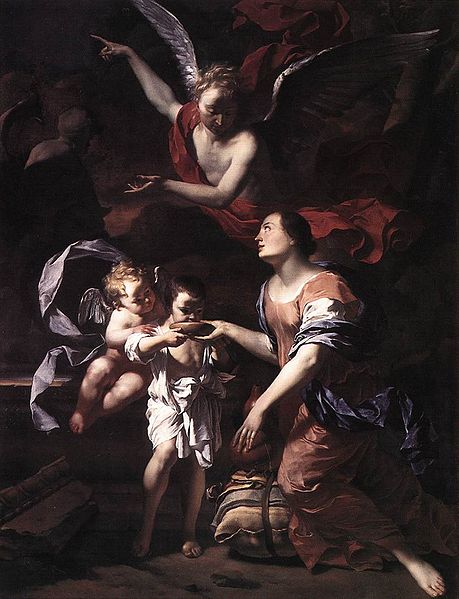
Sometimes, I think, I miss God because I miss the sense of Someone being on the receiving end of my gratitude. My whole life these days seems to be awash in the unrequited, the unacknowledged. Even when I think about being lonely without God, it seems it's only natural, things have just continued on, and it's not so much that He wasn't ever real, but that we've become different people and fallen out of touch. That's all.

And sometimes it happens that you are friends and then
You are not friends,
And friendship has passed.
And whole days are lost and among them
A fountain empties itself.

And sometimes it happens that you are loved and then
You are not loved,
And love is past.
And whole days are lost and among them
A fountain empties itself into the grass.

- Brian Patten, from "Sometimes It Happens"

Thursday, March 27, 2008

Deconstructing Mythologies

Deconstructing a mythology takes a long time.


I'm not speaking here about analyzing the cultural and psychological aspects of ancient mythologies and pre-Christian pantheons (people who might have accidentally stumbled here looking for this type of exploration, allow me to send you on to a truly excellent blog called Between Old and New Moons). Rather, I'm speaking about the cultural stories that we tell ourselves--even today in a modern Western world that so thoroughly assures us that we've left mythology behind--stories that shape our understanding of identity, community, truth, and meaning. What do we do when we have the sneaking suspicion that the stories we tell ourselves are doing more harm than good? How do we deconstruct the "meta-narrative" (as postmodernism would put it)? How do we gain perspective, step back and take a good look at the water that we fishes are swimming in? How do we deconstruct and redefine these stories, how do we create new stories that will help us to shape our lives in new and perhaps better ways?

This question has been on my mind for quite a while now. Working ever more deeply into the mythologies and particular worldview of Druidry, I've started to notice how distinctly it contrasts the stories told to me by modern Western culture. For instance, the very notion that we are so strongly shaped by story is in some ways central to the Bardic mysteries of the Druid path. A notion that I have not seen acknowledged or articulated so well in most other religious traditions--not even in the Catholicism in which I was raised, though that tradition does utilize the power of myth very effectively. Luckily for me, I've always been a poet, a writer and to some extent a storyteller. Perhaps some neophytes to Druidry would find this centrality of story and myth to be counterintuitive at first, but for me, it just made sense. (It was also, I admit, rather empowering for me, as a "starving artist" type who had grown up feeling like poetry had only one of two fates in the modern world: to be tamed and enlisted in the service of the mainstream, or to be marginalized and rendered irrelevant by it.)

This idea of story-shaping came up again for me recently while reading Daniel Quinn's novel, Ishmael, in which the narrator engages in a kind of Socratic dialogue with a telepathic gorilla, exploring concepts of identity, captivity, mythology, history, culture and progress in the modern mind. Over the course of the novel, Ishmael and the narrator deconstruct vast assumptions inherent in "Taker" mythology--about how things came to be this way, about man's rightful possession of the world, about his cultural amnesia and dismissal of the past, about his ability to know definitively the one right way to live while also professing a fundamental ignorance that leads him to destroy the very world he would transform into a utopia... And while all of this is interesting, most of it was also very familiar to me already. I'd already wondered at the oddness of the Genesis story about the Tree of Knowledge and the Fall of Man. I'd already questioned the paradox of asserting man's unconditional and rightful control over the world, while mourning his apparent incompetence at fulfilling what was supposedly his destiny. I'd already learned, by watching nature all my young life, about the very simple "peace-keeping law" of live-and-let-live, of belonging to the world rather than trying to claim it for your own. (In fact, I'd even written a sonnet in high school that began: "I know I cannot claim this world as mine...")

What really fascinated me about this book was its exploration of the conflict between different mythological worldviews, how they interact, and the relative futility of trying to argue one's way out from the inside. I know there is a wonderful quote about precisely this issue, but I've just spent two hours scanning the book and I can't find it (urgh!), so you'll have to trust me that it's in there. Deconstructing a mythology takes a long time. It may even take a lifetime, since after all it took many lifetimes for such a mythology--for Mother Culture--to build up and build up, to come up with answers to every possible question and objection. This is why books like Ishmael and texts like Plato's dialogues, even when they are successful, often leave a reader feeling frustrated. No one text can undo all the work that a lifetime of subtle assumption and reinforcement has accomplished (and no one blog post can do it, either), so instead they ask question after question to which the ready-made answers provided by Mother Culture become increasingly dissatisfying. These texts do not ask questions for which there are no answers--Mother Culture almost always has an answer ready, no matter how flimsy it might be on closer examination--and it would be a mistake to think that because they don't succeed in check-mating the current mythology with a question it cannot answer, that they have simply failed or been a waste of time. The goal of these texts is to point out the bars of the cage, to bring to the foreground our own dissatisfaction with the story we've been enacting. After all, we cannot break free of a cage if we cannot see the bars.

But there are also other kinds of texts. Usually slim, simple, straight-to-the-point little books that look modest, even humble in their aims. But the power of these texts is that they offer a new story about who we are, how we do or should live, and why. With other texts doing the work of pointing out the bars, these books slip us the cake with the file hidden inside. Because, as the narrator of Quinn's novel points out, "People can't just give up a story. That's what the kids tried to do in the sixties and seventies. They tried to stop living like Takers, but there was no other way for them to live. They failed because you can't just stop being in a story, you have to have another story to be in."

Of course, telling a new story, giving ourselves a new myth, doesn't mean the new one will be better than the old one, or even all that different. I guarantee you most high schoolers will have read at least one or two of these kinds of books. There's Descartes' Discourse on Method, there's Marx's Communist Manifesto, there's Machiavelli's The Prince. And what most of these books have in common is that they spend only a little time critiquing the current mythology, and then they set it aside to tell their own story. Descartes, for instance, talks about God and the nonmaterial only long enough to assert a fundamental disjoint between mind and matter, the nonmaterial and the material--but already this is a new story, a whole new way of talking and thinking about mind, the self and the nonmaterial. His reasons for declaring this disjoint are obvious (he needs to set up his arguments for science in a way that won't send the Church after him for blasphemy). And so, the reader asks no other justification for such an assertion, not realizing that this new story now holds this unchallenged duality at its very heart and depends upon it.

A similar phenomenon goes on all the time among particular social or cultural groups within larger society. For instance, a story I've heard circulating among scientific atheists recently is that they're a persecuted minority and that science is in danger of being lost under the waves of anti-intellectualism rampant among misguided religious believers. Now of course, I look around a see huge amounts of time and money being funneled into the sciences on all levels of education and industry--I see some of my close friends being paid to attend grad school and further their education, while I have to wait tables just to buy myself time to write poetry and silly ol' blog posts--I even see religious believers embracing, applauding and utilizing sciences in their everyday lives, and even sometimes to support and deepen their spiritual beliefs--and this story sounds like nonsense to me. What could they possibly mean when they say science is in danger?

What they mean, of course, is not that science as a method is being threatened. After all, as a practical technique for discovering useful information about the world and how it works, science has secured its legacy over the past couple hundred years and it's unlikely to be displaced by less practical methods any time soon (even the fundamentalist Christians and creationists have taken to using pseudo-science to justify their beliefs, an effort bound to benefit science more than creationism under the inevitable closer scrutiny of thinkers to come). What this particular cultural group is worried about is not the loss of their method, but the loss of the mythology which gives them a particular self- and community-identity within a larger cultural context, and which shapes that larger cultural context as a whole.

After all, the supremacy of science as the single best way of "knowing things about the world" (i.e. science as a mythology or ideology, rather than as a working method) is just the latest manifestation of the Taker mythology that the world belongs to man and it is his destiny to control it. To propose, as many religious people do, that the world belongs to man through God is a dangerous step away from humanity's self-proclaimed autonomy. It's not so far a leap to move from this idea to the idea that man, in fact, belongs to God (or the gods) and that, therefore, man actually belongs to the world, and not the reverse. If people begin to change the story they tell about themselves, if they begin to see themselves as belonging to the world instead of possessing it, then science and other methods for attaining knowledge of and control over how the world works, while still useful, will no longer of primary importance. This is why "anti-intellectualism" is an accusation thrown at religious fundamentalists, while "snobbery" and laughable irrelevance are thrust upon anyone who reasonably and quietly questions science's current primacy, even when that person is, herself, highly educated in other fields such as philosophy, theology or political theory. (Okay, yes, someone over at Cosmic Variance called me a snob when I insisted that philosophy and the history of ideas is something worth knowing. So it is a bit personal.)

Most of us get this. We know that scientific atheists naturally feel threatened by religious fundamentalists. So when they declare (with the fundamentalists' whole-hearted agreement) that religion and science are at war with one another, most of us let this assumption slide without demanding a justification. But this is exactly the kind of mistake we first made with Descartes and his mind-matter dualism. No argument stemming from the basic assumption that religion and science are mutually exclusive will succeed in changing anyone's mind on either side, because we're still trying to argue our way out from within a shared mythology. We've already seen that this type of arguing doesn't work--the best it can do is illuminate our dissatisfaction (and I think it's safe to say that this is exactly what it accomplishes). Sometimes bringing this dissatisfaction to light is helpful and moves us in the direction where we can begin to formulate alternatives. This is the case in texts like Quinn's and the Socratic dialogues, when the discussion is framed civilly between comrades both seeking a greater mutual understanding. When couched in terms of ideological wars between cultural groups, however, such dissatisfaction is often just chocked up to the inherent frustration of dealing with such stubborn idiots, and so we miss our chance to think more creatively about its root causes.

I think I've worn myself out on this topic. I know you must be heart-broken. I have more to say, about poetry and faeries and coincidence, but I'll leave that for another day...

Saturday, March 22, 2008

Wonder

Wonder

Her absent god and his empty tomb
amidst the snow and flower-bloom,
the ready earth and garden tilled,
the Gardener smiling, sweet and stilled:
moon-full night and balanced day
have swept even her god away.

Tuesday, March 18, 2008

Letter to My Brother.

Unless someone like you cares a whole lot,
nothing is going to get better. It's not.

- Dr. Seuss, from The Lorax


Dan,

Thanks for the letter. I was actually on the phone with Raymond most of the times you called, venting and everything, and then I was just too tired to want to talk anymore, so I watched "The Lorax"--do you remember that little cartoon based on the Dr. Seuss book, about someone cutting down all the trees in order to get rich, and all the animals and plants die off? Even though it's much more about the environment, I think its message relates back to the frustration both of us have been feeling recently.

In case I haven't told you this recently, I really am proud of you. I really think we're both so lucky to have our family, even if we fight sometimes over silly things. We've been blessed by wonderful examples in our lives of people who do care deeply about the world and work very hard to make a positive difference. I was just telling Dad that on the phone the other day--even though I joke about hating capitalism and business and everything, I really couldn't be prouder of you and all that you've accomplished (and will accomplish), because I know that you are an understanding and caring person, someone who has perspective and good priorities. I trust that you'll always work hard to do what is right, and that's far more important than any quibbles over ideological differences.

I get frustrated with the people around here because it's exactly like you said--their sole priority seems to be getting shit-faced and laid at every opportunity. And it is a waste, when there is so much more to life that is beautiful and worth-while. I thought things would change once I was out of college, but even the adults I know, people five, ten, even twenty years older than me are still behaving this way (if anything, it's worse, because those few "idealists" from college are expected to settle for being "practical"). It's because I feel so lucky for my life that I get so frustrated and lonely when I feel like I can't share it with those around me because they just don't care and aren't interested. Talk of responsibility and gratefulness, work ethic, restraint, complexity--all these are written off as naive idealism. The fact that I want to feel a connection with a person is laughed off as just being too innocent for my own good. They don't understand that when I blush at crude jokes, I'm not embarrassed for myself, I'm embarrassed for them, because it's demeaning to them to be so crass and shallow when they could be so much more than that.

Like you, I think I had a defining experience that shaped my whole attitude in this respect. For some reason, I think I've always been a little crusader for the weak and exploited (remember in elementary school when I had an "endangered species" club with my friends and we raised money to adopt a manatee?), so I didn't necessarily need to go to Brazil to understand how privileged I was. But back in 2003, I went with some college friends to a war protest in D.C., and on the way there, one of the cars in our caravan broke down. The group's self-appointed leader (and driver of the other car, the one I was in) decided to continue on to the protest, leaving the others behind in the middle of D.C. without a working cell phone and no guarantee they could get their car working again. I was so angry at her for that decision, which I thought was completely irresponsible. That's when I realized that that you can't just ignore those problems closest to you for the sake of solving the world's "larger" problems. How can you save the world, if you can't even care for your friends? How we interact with the people in our everyday lives is just as important as who we vote for or what charities we donate to.

So that kind of thinking trickles down, for me, to apply to even seemingly unrelated situations on a personal level, like rejected romance. It's not that I was shot down that hurt, so much as that the guy basically told me he thought I was a joke, and even seemed angry at me for spoiling his fun. If people can't find it in themselves to care for those immediately around them, if they treat even those people like mere objects to be used for pleasure or amusement instead of connecting with them in a meaningful way--then what hope is there that they'll care about the larger things? If they have no foundation in personal relationships and friendships, what do they have to build on? No one person can save the world alone, so we have to form those bonds of friendship and community, so that we can all support each other in becoming better. I try to be an example of that effort, but instead it seems like I'm just another punchline.

Anyway, having slept on it, I realize I was probably just overreacting, and probably not being fair to the guy, either, who must have felt awkward and unsure how to diffuse a potentially hurtful situation. Shrug. I'll talk to him later this week and I'm sure things will work out--it's not like I don't have experience in overcoming awkward situations. ;) Often I even make closer friends as a result. It's just a shame that's all it ever ends up being. When will I get to have a family, so that I can pass on all the good stuff that Dad and Mom gave to the two of us? What's the point of having so much to be grateful for, when you can't pass it on and share it with others?

--Ali


(Parts 2, 3, 4, 5, and 6)

Thursday, March 13, 2008

Dance Trance Revolution

Remember how I had promised to write a few more poetic posts for the up-coming spring, instead of nit-picky obnoxious posts? Here's the thing about plans: uh....

This is not going to be an interesting or relevant (let alone poetic) post either. I'm coming down from a dance high.

Yesterday I spent twelve hours with a very good friend of mine, Jen, talking and talking about everything under the sun (and moon, by the time we were done). We met "around noonish" for lunch, then restaurant-hopped from Sam's to the place where I work to Starbucks (sadly, but it was next to the laundromat, and Jen had to do laundry and pack for her spring break trip that she left on this morning); we finally parted ways just after midnight. I have to say, it felt like one of those magical days when everything just clicked into place. Sometimes, so often surrounded by people who ignore me, don't understand me or make me slightly uncomfortable, I forget how absolutely freeing and refreshing it is to get into a groove with someone who knows and cares about you, and to have that groove last all day. Sometimes when this happens, I slip into a slightly manic stage--I've noticed this especially after long periods of relative restraint and stagnation, it's as if the energy has hit a block and backed up along the synapses until suddenly it all comes bursting out at once in a kind of noisy chaos. It's easy to feel ungrounded and a bit fizzy when this happens, and the best way to avoid it, I guess, is to try to keep the energy flowing smoothly rather than letting it build up behind a block.

Am I making any sense? One result of my long day yesterday was that it ran me almost dry for today, which happens to be gorgeous, sunny and warm. I'm not usually a very social person, and being around anyone, even a good friend, for so long and maintaining the kind of intense, animated discussion we were having--well, it exhausts me. When I got home last night, I realized my throat was tight and sore from talking, and that night I dreamed first of my right foot being torn into three pieces (which I had to staple back together and then have a healer wrap in gauze and numbweed) and then of being chased for miles by a slick, beautiful greyhound (that would be my gut-bunny dreaming, I guess). So all day today, instead of feeling ready and able to sit down in front of the computer and work, I've felt rather worn and bombarded by sunlight. Rather than center and focus in, all I want to do is splay (v. to spread out, expand, extend; to flare). Bumbling away the hours into mid-afternoon, I decided finally to walk to the grocery store and pick up some supplies. On my way home, listening to my iPod, I began to feel that internal beat that I love about punk rock music...

Which led to a two-hour dance-a-thon in my living room. Whew! Let me just tell you, I am a horrible dancer. Don't be deceived. I couldn't appear graceful on the dancefloor if my life depended on it. Which is why it's been so long since I really just danced for any extended period of time, especially without any self-consciousness at all (or running into the furniture because I was a little drunk). Sure, once in a while, I'll put on some music and dance for a song or two just to ground some excess vibes, but usually that's about it. Today, though, I really got into it. If I were feeling more poetic or focused now, I could wax philosophical about the experience, but the truth is, I'm still buzzing. I've heard of other Pagans talking about the dance trance, the rhythm of movement and breath (especially in, say, a drum circle or ritual setting); even my OBOD gwersu recommend using dance as a method of shamanic journeying or preparation for the celebration of the holy days in the yearly cycle. But I've never really tried it. Kind of like chanting, I just wasn't sure I "got" the point of it, or the knack of it for that matter.

As of today, that's definitely changed, and we'll certainly see about incorporating dance into future celebrations and rituals. This was in no way formal ritual or trance work, and the music wasn't always conducive to spiritual contemplation (being mostly angry punk music about rejected love and disillusionment), but I could definitely see the potential in the future for "dancing my worship." There were moments when gesture, movement, form--all seemed to meld and melt, and my upraised arms or stamping feet were not just willed actions of the body, but communicative experiences of Spirit itself. I think I'm going to work with that, see what unfolds, see where it might lead...

But for now, I have to go close my windows, because it's actually much chillier in here than I thought when I was working up a sweat.

Wednesday, March 5, 2008

Mud & Mess, Life & Death

Some thoughts about spring, mud, death, war, grief and necessity.

Perhaps it is only by confronting the pain and horror of destruction that we can see our way to the sublimity of life and creation.

Monday, March 3, 2008

On Romance, Kicking & Screaming

I have a problem with romance. O yes. Miss Perpetually-Single over here has a problem with romance, what a shock! Somebody, call CNN, this is breaking news!

Seriously, though. Blah. I know I don't normally write about such things in this blog, which was intended to be more firmly committed to purely spiritual and philosophical (and sometimes poetic) ponderings, but if there's any spiritual path that happily and eagerly includes sexuality, sensuality and romance in its endeavors and concerns, surely it's Paganism, right? Right. And even if this particular Distressing Damsel here doesn't officially consider herself pure Pagan, well... we can overlook that fact this one time, especially in light of recent news that puts her more firmly than ever outside of her mother tradition. So.


Sequence

I'm a bit behind on the Valentine's Day Blues, clearly, but the sequence of events is as follows:

[a] About three weeks ago, Ali decides she wants to get a tattoo commemorating her initiation into Apprenticeship with AODA, just as she got her first tattoo to commemorate the beginning of her Candidate level work the summer before last. She gets it into her head that she wants a Celtic-knot armband around her upper left arm, one evocative of ocean waves, out of which the Salmon of Wisdom jumps, etched echoing a crescent moon on her shoulder, all in blue. (Very sexy, she swears, or it will be, anyway.)

[b] Upon deciding this, however, she dispassionately examines her arms in the mirror, only to discover they are in fact quite flabby, not the best or most shapely canvas for such meaningful body-art. This won't do.

[c] Ali begins working out regularly, a simple repetition of push-ups and sit-ups that soon expands into a regimen of aerobics and stretches, as well. ("Regimen" is, by the way, a fun word to say.)

[d] Regular exercise, after initially leaving Ali expectedly sore in all sorts of flabby places, also has the unexpected result of thawing out her crush-muscle. The crush-muscle, for those of you who aren't already aware, is located in the pit of the stomach and is shaped like a pink-and-white lace Valentine heart with angelic and innocent-looking butterfly wings (these tend to flutter excitedly for no apparent reason). The crush-muscle is often mistake for the heart as the Seat of Love; understandably, as it is indirectly connected to the heart via the brain's frontal lobe, which it must shut down in order to circumvent. Ali's crush-muscle has been frozen stiff for quite a long time. (A long story, involving misdirection, sleight-of-hand, regret and autonomy.)

[e] Thanks to her slowly-thawing crush-muscle, Ali soon discovers she has a romantic... shall we say "infatuation with"? No, too strong. Let's say a romantic... thing for someone she works with. This causes problems for several reasons, not least of which is that there is a guy with whom she has been exchanging emails over the past few months who seems much better for her and more obviously into her. On paper, at least. But, as the interwebs will tell you, this is an increasingly paperless world.

O, what to do? Let's stop being clever for a moment.


Clever Girl

Wouldn't that be nice? The problem, of course, is that I have only two ways of responding to romance: being coldly clever, and being moonfully idiotic. The former reasserts the frontal lobe (which I happen to think is a rather sexy part of me, if I do have to say so myself) and, through it, the more sincere aspect of emotion, as well as my self-respect and my respect for the other with whom I'm trying to engage, ostensibly flirtatiously; the latter hands the butterflies the wheel. And they don't steer very well.

There was a time when I could balance these two responses and come off as mildly attractive to the opposite gender, who seems to appreciate flattering attention (from the right person) when it's coupled with a playful hard-to-get detachment. Now, however, things are grim. I'm up against quite predatory women who seem to have this combination of availability and disinterest down to a science, mostly because sincerity and intimacy take a backseat to just having something (or rather, someone) to do. My priorities are different. Romantic predation has always struck me as a bit demeaning. Metaphorically speaking, I love the thrill of the chase less than the exquisite harmony of the dance. Romance, to me, should be a communal and communicative art, rather than a calculated science. But dancing takes grace, a basic familiarity with the steps, and a good ear. I always seem to be jamming to punk or waltzing to the wind, while everyone else is busy grinding to R&B. I am not what you would call "easy," not euphemistically and certainly not literally. I am, in fact, rather difficult and odd.

Which brings me to another stumbling block between me and romance. The truth is that, even though I like who I am and I have worked very hard to become the person I've become, I am really quite odd. Part of me worries that a romantic relationship would somehow make me... normal. Not because only dull, mainstream people have romances, but because my priorities have always been so clearly aligned to the concerns of love--whether that love be spiritual, familial, romantic or the love of friendship--that such a relationship would naturally change the foreground of my psychic landscape. Am I willing to welcome such a change? I say, quite often, that I would very much like a partner, a companion, to travel with me through life, however briefly. Someone to pass the time with, to talk with, to cuddle and to cherish. Someone who gives me butterflies when he makes eye contact, someone who can do me in with casual silliness, someone who isn't just a strategic "smart match" on the proverbial paper. But if there were such a person, he would certainly change me--there would be no point to a relationship if he didn't or couldn't.

The thing about some of these predatory women is that they're very good at throwing themselves elegantly at the latest Hott Guy (even if, two weeks ago, they didn't give him the time of day). They're so good, in fact, that it makes me wonder if maybe they just don't have much to lose. Being single as an adult has forced me to develop a strong sense of self, to individuate, to become my own person. I'm heavy, dense with character. It's much harder to throw myself around these days. I find letting gravity and natural attraction take their course works much better, but just like in chemical bonding, it's hard to form lasting connections with others when they're all bouncing about and throwing themselves around excitedly. (I just called my best friend to check on the chemistry metaphor, and it holds. He says it's like two bowling balls covered with glue: ease them gently together and they'll stick, but send one slamming into the other, and the force of the ricochet will overcome any sticking-potential the glue might have had. So goes chemistry, so goes the world.)


Fearful Symmetry

Which brings me to my last but not least romantic trip-up: bad luck. You have not seen a girl with more bad luck. Take a random customer at the diner where I work, one who has been regularly showing up at 7:15 AM on the dot for breakfast for years and years. I need only mention casually to a coworker that I think he's cute, and he'll never be seen again. (That's a hypothetical, as most of our regulars are creepy old men, who never seem to go away no matter how much you might want them to.) Or another example, this time directly from real life: young man leaves shy waitress his number; shy waitress loses the number, much to her chagrin; two weeks or so later, young man returns and shy waitress has a friend approach him about the lost number, exchanging emails; young man emails shy waitress later that week to say that when he left the number, he was single, but since then he's become "unavailable" and happily involved. Oooo, so close!

If you're thinking perhaps this is just paranoia, all in my head, a manifestation of fear or bitterness--o ye of little faith. As part of the Divination Spiral of my AODA Second Degree work, I've started casting Ogham readings on a somewhat daily basis. The other night, with these romantic matters on my mind and my crush-muscle aching slightly like a joint that has only just come in from the cold, I decided to cast a three-few (past-present-future) reading regarding the question, "What do I need to know about my romantic life?" The fews I drew were:

Huath, Nion, Straif,
or
Whitethorn, Ash, Blackthorn.


The ash tree is associated in various mythologies, including Celtic and Norse, with the axis mundi, the World Tree. Its straight-growing branches and high-reaching trunk were employed in the making of spears and staffs, and its expansive root system often keeps other plants from establishing around it, so that it tends to grow alone in its own space. Both the whitethorn (or hawthorn) and the blackthorn are prickly shrubs or small trees, often used in hedgerows to protect, guard and bar the way.

It's hard to escape the astounding visual symmetry of this reading: the single, pole-like tree reaching deep into the earth and high into the heavens in the present moment, but bound on both sides, past and future, by foreboding, low-lying thorns that complicate and wound. But the associated meanings of these fews are even more striking: while the whitethorn symbolizes obstacles and stumbling blocks to be overcome with patience and indirect progress (a good fit to my romantic past, which for the most part has been at least fulfilling even in its difficulties), the blackthorn symbolizes pain, damage, separation, division, and downright warfare. Meanwhile, the ash is a tree of transformation and manifestation--personal evolution directed by the magical will, but also with a heavy emphasis on the role of Fate. Drawing the Nion few, Mountfort suggests, "counsels you to regard this continuous unfolding of events as signposts" pointing you towards your unique destiny. With the future few of Blackthorn, I wonder just what kind of romantic destiny I am being guided towards.

All of this leads me to wonder, also, what to do now. With both bad luck and the sticks belying a future of romantic difficulty and hurt--can I avoid it? And even if I could, should I? Isn't despairing of romantic, personal love just as much a wound as the pain of rejection and failed connection? I remember that excellent movie, Eternal Sunshine of the Spotless Mind, that raises not just the question of why some people just seem drawn naturally together, despite all the conniving of others, but the equally important question: if you knew it would all end badly, would you risk it anyway?

Sunday, March 2, 2008

Influenza & a Book Meme.

Cat, over at Quaker Pagan Reflections, tagged me to participate in this book meme that's been going around. Speaking of what's going around, I'm currently knocked flat by a rather icky case of the flu. Yesterday was defined by splitting headaches, inflamed throat, feverish... er, fevers, and frequent vomiting (for those of you who really wanted or needed to know).

Now it seems the worst is over, though I'm still left feeling a bit faint and fragile. So here's that easy book meme to keep you entertained until I'm up to writing something substantive again:

1. Pick up the nearest book (of at least 123 pages).
2. Open the book to page 123.
3. Find the fifth sentence.
4. Post the next three sentences.
5. Tag five people.

Technically, the nearest book to me is Ross Nichols' The Book of Druidry, which gives us:

Generally, the use of stones, although impressive, limits the mobility of Gorseddau or circle meetings; the modern stones idea was started by Iolo Morganwg and, whilst good to emphasize continuity between past and present and the true nature of that for which stone circles were made, it may now be rather backward-looking when we realize a circle as a structure mentally realized for the operation of psychic faculties.

Playing through the three chiefs on the eastern side are the triple forces of light, which in some stone circles have been marked by pointer stones outside. The centre stone to the due East represents the rays from the equinoxes, the times of balance; the stone to the North-east is the high force of light at the midsummer solstice, that to the South-east is the place of rebirth of the sun in midwinter.


But I haven't actually started reading that one yet (it's in my to-be-read pile currently), so how about the next-closest, Ronald Hutton's Witches, Druids and King Arthur, which I'm about half-way through:

This in itself, to Iamblichus, justified the heavy investment in ritual, material trappings and sacrifice characteristic of traditional paganism, and which acted as part of a process of correspondence and reunion. The cannier pagan was distinguished by knowledge of the precise nature of the material substances, numbers and incantations which should be used to contact and work with particular deities.

Even among canny pagans, however, to Iamblichus theurgists were definitely superior.


I'm not lucid enough to tag anyone, and besides I think almost everyone I read has already participated. See, this is why the kids don't ask me to play tag--I'm very bad with the concept of passing it on.