Wednesday, July 25, 2007

The Swan Maiden's Story

The following is the story of Angus Og, the Celtic god of love, and Caer Ibormeith, the Celtic goddess of dreams. This myth caught my attention the very first time I read it, and ever since I find my mind drifting back to it often at unexpected times. Each time I remember the tale, it seems to shift and reveal new meanings and layers of symbolism. As I've mentioned before in this blog, I am interested in the process by which Pagans, Witches and Druids "meet" and choose (or are chosen by) their patron deities. Perhaps this fascination with this god and goddess (in particular the goddess, Caer, who always seems to me to be the most beautiful epitome of strength, freedom, purity and openness to love) is the beginning of my own journey into a deeper relationship with the Celtic family of deities...

The story I've shared here is one I wrote in a letter to a friend. I'd wanted to mention only the briefest outline of the story, but as I began to write, it took a shape and form--a whole life of its own. Some of the details that I've included and expanded upon are not in the original myth, and some are downright inaccurate or in contradiction to the original tale. For me, retelling a myth is an exercise in creative engagement--an imaginative process of entering once again into a familiar story and allowing the events to play out again. Sometimes, with each new telling, variations arise. I think, for the most part, I'm okay with that. But if anyone's interested in reading a more historically accurate version of the story, it is available online here, as well as in Rolleston's Celtic Myths & Legends (which is where I first read it).

Artwork by Mahud

The Story of Angus Og and Caer Ibormeith

Once there was a young man named Angus Og (all the Celts have weird names) who was surpassingly handsome, and so he was light-hearted and carefree when it came to "wooing" all the girls. He had many titillating romantic affairs, since he was completely confident that he deserved the prettiest girls and that they were just lucky to be with him. One night, though, he has a dream in which he sees the most beautiful woman imaginable. He wakes up stunned, and suddenly all the local girls seem dull and dim-witted in comparison. The next night, he dreams of the beautiful maiden again, and she sings to him a song of such sweetness that it could lull whole kingdoms to sleep. He sees that her wild, feathery hair is silvery-white, and she wears tiny golden chains adorned with bells all about her, draped around her waist and wrists and throat. He awakes the next morning having fallen completely in love with this dream-maiden, and yet he is intimidated by her beauty and wary of the golden chains. For the first time in his life, he finds himself full of doubt. He falls very ill, and for a year and a day, he lays weak and feverish in bed, refusing to see anyone or seek any help, out of embarrassment for his lovesickness. Every night, he dreams of the beautiful maiden, and she sings to him until his fever subsides.

Finally, Angus Og's mother convinces him to speak to his father, the Dagda. The Dagda advises his son to go and seek this dream-maiden, to see if she is real and if he can win her affections. (The story doesn't say this, but I think the Dagda just wanted to get Angus Og out of bed and moving around--fresh air does wonders for a bruised ego. The Dagda probably figured that after a little while of tracking down beautiful girls who fit the dream-maiden's description, Angus Og would forget his dreams completely and be back to his old self again.) Angus Og decides to take his father's advice. For another year and a day, he goes off searching the far corners of the world (by which they probably mean, Ireland) to find his dream-maiden and to prove his love for her. When all seemed hopeless--and Angus Og's obsession had not abated in the least--his brother, Bodb the Red, finally finds a woman who fits the description. Bodb brings Angus Og to the side of a lake called The Dragon's Mouth (catchy name, eh?) to see the maiden. And there she is, just as beautiful and strange as Angus Og first dreamed, bathing on the shore of the lake among one hundred and fifty other girls who are her servants and handmaids. For it turns out, she is Caer Ibormeith, the daughter of a Faerry King.

As is always the custom in polite fairy tales, Angus Og goes to her father, the Faery King, to ask his permission to woo Caer. The King responds, in short, "Good luck, man! She is willful and wild, more powerful than I am. I cannot bid her to do or not do anything she has not already decided for herself. You're welcome to try your luck... But one thing," the King says, "Caer has this little quirk about her--don't ask me why... Every autumn, she transforms herself into a swan, along with her one hundred and fifty handmaids, and they all fly off somewhere for the winter. The only chance you'll have of wooing Caer is if you go to the shore of The Dragon's Mouth on the morning of her transformation, and call to her by name."

Angus Og, mystified but still overwhelmed with love, is willing to try anything. And so, when that autumn day finally arrives, he goes alone to the shore of the lake at dawn. This time, instead of the many girls bathing on the shore, he sees one hundred and fifty swans gliding serenely across the glassy surface. While still in the form of a maiden, Caer was by far the most beautiful and easily stood out in a crowd, not least because of the golden bells she wore--but now, as swans, all the girls look almost exactly alike. For a moment, Angus Og panics, sure that he'll never be able to tell which of the swans is Caer, that he'll never be able to call to her by name and so win her love. Trembling with uncertainty, he closes his eyes and tries to remember the dreams in which he first saw the lovely swan-maiden, listening for the song she sang to him as he slept. For a moment, he imagines that he hears that same song drifting across the lake, and in a burst of eager self-forgetfulness, he calls out, "Caer! Caer!" When he opens his eyes, he sees a swan gliding slowly towards him from among the others, and as it reaches the shore, its form melts away to reveal Caer in all her beauty, still wrapped in a cloak of white swan feathers.

Caer smiles at Angus Og and asks him why he took so long to answer her call, why almost three years had passed since she first sang to him in dream. He admits that he, who had always been so casual and indifferent about pretty girls, had been embarrassed by the sudden sincerity of his love, and that it took a long time to overcome his doubts and seek her earnestly in the place where she dwelt in waking life. For so long, he had been content to dream.

The story ends with Caer agreeing to be his wife and lover, but only if he will transform himself into a swan and fly away with her. He agrees whole-heartedly, and together they unfurl their long, white wings and take flight across the lake, singing a song so sweet and wild and beautiful that the whole kingdom fell into a peaceful sleep for three days and three nights (during which, I'd imagine, they had their own fun). After this feathery honeymoon, according to Celtic mythology, they both transform back into human form and live "happily ever after" as the handsome god of love, and the beautiful goddess of purity and dream.
Thursday, July 19, 2007

Harry Potter & The Seriousness of Childhood

I'm not a parent. I'm not really... around children all that much (serving hog dogs and french fries to the obese little buggers in a family restaurant while the adults at the table demand more soda pop and extra mayonnaise--doesn't count). That said, I do know a thing or two about being a child--having been one within the last decade or so--and about living around young adults who persist in acting like children. I live cheek to cheek with this phenomenon that Ron Charles calls "cultural infantilism" in his critical article about the Harry Potter books.

When it comes to the Harry Potter phenomenon, there is one important fact to keep in mind: they are children's books. They are not "serious" adult novels, they do not grapple with the complexities of foreign political policy, the devastation of war, the moral ambiguity of conflicting desires for "the good", the insecurities of a materialist, isolationist culture, the obstacles to healthy partnerships between the sexes... They're just cutely-illustrated books about a bunch of child-wizards waving wands around and playing at puzzle-solving within the imaginary world of Hogwarts. Right?

Let me say it again: these are children's books. Any self-respecting adult might be embarrassed to admit enjoying a series of books meant for children, especially when there are plenty of "adult" novels that address serious subjects like war, sex, morality, politics, religion, and so on. The question the Harry Potter phenomenon begs is not whether they are good books for children--they must be at least as good as the latest "Barbie Goes to the Mall" picture book, after all--but why so many adults are reading them (and why this bothers certain people so much).

One easy answer is that the first Harry Potter book was published ten years ago. Ten years ago, I was fourteen, and my little brother was twelve, more interested in climbing trees and playing soccer than in reading books (but, happily, not at all interested in video games or the internet, let alone cell phones or iPods). Today, I'm a young woman whose college experience was defined by 9/11, religious and political fear-mongering, and the waging of an unjust, unnecessary war despite worldwide protest; my little brother is now a young man, about to graduate with a B.S. degree in marketing, who finds himself uncomfortable with the way aesthetics and psychology are warped and number-crunched into base methods of manipulating consumers into buying unnecessary products beyond their means. What does that have to do with Harry Potter? On the surface, nothing at all. But look again, and you discover that we are both--as grown, mature and intelligent adults--wading knee-deep in a culture of insecurities, over-reactions, emotional turmoils, immediate gratifications and damn-the-consequences agendas... We're adults stuck in an adolescent world.

Neil Postman has some interesting things to say about the "disappearance of childhood" in our modern Western culture which, because of the dominance of television and other multi-media, has destabilized the socialization of children into adulthood. Contemporary ritual theorists bemoan the lack of clearly defined social moments of initiation into adult life, replaced instead by relatively individualized benchmarks like first car, first sexual experience, first cigarette, first beer, first full-time job, etc. As childhood slowly shrinks, the in-between "adolescent" stage seems to grow ever more expansive, reaching back to include children of ten and younger, and forward to embrace adults in their early (and sometimes even late) 20s who are still living out the irresponsibility and frivolity of their college days. When our ubiquitous multi-media culture isn't busying shrinking childhood, it occupies itself with idealizing and romanticizing it. We've suddenly come to believe that children "shouldn't have to confront" difficult issues like war, violence, sex, diversity and free will. Parents lobby school districts to ban books they feel are "too adult" for their children to read. Even widely admired classics (not to mention books that address censorship and ignorance) aren't safe from our romanticization of a childhood free from struggle, risk and, in the end, growth.

Enter J.K. Rowling, and a charmingly normal, bit-too-skinny, ten-year-old boy named Harry Potter who suddenly discovers he has power and potential none of the adults around him want to admit, and furthermore, he has the chance to develop and utilize these powers either creatively, or destructively. Now, gee, why would anyone living in the modern world, struggling to emerge mature and whole from the mire of unending adolescence, be even remotely interested in such a silly story? After all, what are the Harry Potter books, class? They are children's books.

You can guess by now where this critique of Charles's review is going. Charles sees the Harry Potter sensation as a cause of or contributor to infantilism. What other reason could there be for adults reading books meant for kids? he demands. But I disagree. I see it as a symptom of, and a legitimate response to, the increasing dismissal of childhood as a "serious" stage of life, and the need to recapture--and perhaps relive--the transition into adulthood in a socially-shared way.

The remarkable aspect of the Harry Potter books is that the characters do grow up. The angst-ridden, isolated Harry of book five (The Order of the Pheonix) is not the same innocent, wide-eyed, puzzle-solving youth who fought a troll in the girl's bathroom in book one. By the end of book six, Harry has already confronted a large number of complex "adult" issues, including:
  • the importance of friendship, and the appreciation of diversity and difference as necessary for a thriving, challenging community;
  • the struggle for truth, and the ambiguity of "good" and "evil" in complex social and political institutions;
  • the reality of death, and the existence of unmitigated injustice to which different people respond with different emotional needs;
  • the potential for any human being to choose creativity and growth, or destruction and death, and the need to make such choices deliberately, conscious of their consequences;
  • the role that hope (rather than despair), love (rather than fear) and sacrifice (rather than self-preservation) play in the inevitable initiation into adulthood.

Charles describes "the unique pleasures of reading a novel" as "that increasingly rare opportunity to step out of sync with the world, to experience something intimate and private." Far be it for me to disagree, when I've only just written an ode of my own to solitude, stillness, contemplation and engagement. However, what Charles fails to consider is that, in a world that is increasingly "out of sync" with itself, the "thrilling unity" of the Harry Potter phenomenon may in fact serve a social function that has been increasingly neglected. After all, Harry Potter fans don't just watch the movies, buy the action figures and attend the midnight costume parties... they also read the books. What they respond to is not simply the hype of a mass-media experience, but the sense that others are also engaged, on a large scale, with the complexities and ambiguities these books address: that childhood is not frivolous, that it is not inaccessible to a jaded adult population, and that it can be an on-going source of growth and community even as it is transcended.

Harry Potter - Bad for America

I recently announced on Twitter that I will not be tolerating any spoilers regarding the latest and last Harry Potter book (indeed, as of Friday afternoon, I will be going officially and completely "offline" for several days in order to revel in my reading without interruption or distraction). In response, a friend of mine announced (I hope playfully!), "Harry Potter is bad for America" and sent me a link to an article by Ron Charles published a few days ago in the Washington Post. Now, personally, any time someone says something is Bad for America, I tend to giggle a little bit and maybe wink conspiratorially in the direction of the responsible party. But being a thoughtful person with my fair share of crusades against ignorance and infantilism, I like to give even the most curmudgeony protester a chance to make their case.

So what exactly were Mr. Ron Charles's objections to the Harry Potter books? For most of the article, he dwells almost exclusively on the mass-marketing of the books (with their subsequent movies and merchandise) to seemingly intelligent, mature adults. He laments this "bad case of cultural infantilism," with its "Cap'n Crunch in a Gucci bag" adult editions of Rowling's books and the ever-increasing synchronization of the public's "fits of enthusiasm" on each book's worldwide release date. Of course, the same stunt was tried with the final two films of the Matrix Trilogy, which fell disastrously flat--so perhaps childish, synchronized enthusiasm for mass-marketed media is not the sole explanation for the Harry Potter books now decade-long success, after all.

Charles has, it seems, stepped beyond the job description of "book critic" and become an analyst of cultural trends. Since I'm not professionally qualified to be either, and yet here I am pretending to be both, I suppose I'm not one to complain. Furthermore, I don't entirely disagree with him regarding his general misgivings about the decline of serious readership, and the glorification, even among those who deem themselves "professional writers", of the "pop novel" which strives to be a book-version of what might as well be the latest Thursday-night television drama. I've ranted on about these very topics.

On the other hand, I am a fan of the Harry Potter books. I am also, I'd like to think, an intelligent, mature adult (no, I don't just play one on the internet). My tiny apartment is crammed with bookshelves, all creaking under the weight of myriad "serious" works of classical and contemporary fiction, as well as poetry, creative nonfiction, philosophy, mythology, and the like. Does this make me a hypocrite? No. Does it make me an exception to the "cultural infantilism" that so disturbs Charles? Perhaps. But I think, most importantly, it suggest that the Harry Potter craze is not a cause or contributor to the "death of reading" in America, but a symptom of much larger cultural trends. In a modern world where "seriousness" is often a synonym for cynicism, pessimism, irony and apathy, Rowling has written a set of books addressing "serious" subjects such as death, truth, morality, power, corruption, choice and hope--books that are not only accessible to children (whom we have, perhaps, learned to dismiss as potentially "serious" readers), but which actually trace the complicated process of growing into adulthood.

At this point, we might throw our hands up into the air as the debate over Harry Potter devolves into a passionate (and equally biased) he-said-she-said scuffle. Charles's only direct criticism of the books are regarding "the repetitive plots, the static characters, the pedestrian prose, the wit-free tone, the derivative themes," but he fails to cite any specific examples from the books themselves. Indeed, at the beginning of the article, he seems to imply that he has only ever read three and a half of what will be seven total books (the first three being by far the shortest, simplest and most "childish," as any Harry Potter fan will tell you). Is it possible that he is that notorious kind of critic, most annoying and belligerent of all--the kind who hasn't even read the books he's criticizing? Horror of horrors. Of course, we will forgive him for this possibility--we understand that his career demands that most of his time be spent reading "serious" novels written for "adults" and that he would have no reason to read children's books that his daughter had grown bored with. (We will also forgive him for assuming that, when a sleepy ten-year-old grows bored of listening to her father read a book in a disengaged monotone, it must mean the book is boring and the story is bad. After all, Mr. Charles is a book critic, not an expert on the various techniques of the artistic craft of oral story-telling.)

What is left for us, then? In my next post, I will look at some of the things that, as an actual reader of the Harry Potter books, I have most enjoyed and appreciated about the series. I'll discuss how I think the books' central themes address some of the underlying symptoms of "cultural infantilism" that concerns both Charles & me (and, I would guess, probably bothers Rowling as well). So, until then...

Wednesday, July 18, 2007

After the Earthquake.

I feel as though yesterday's post was a bit muddled, so consider this a clarifying moment. What follows below is mostly an excerpt from my personal journal, explaining some of the circumstances that gave rise to yesterday's contemplations. I am trying to keep this blog somewhat... professional? Is that a good word? That is, to deal with spiritual, philosophical and poetic matters in a way most appropriate and engaging in a public medium. Unrevised, uncensored personal ramblings don't usually seem suitable. Still, on this occasion, I feel like making an exception. Perhaps the latest cartoon from XKCD on "Dignity" has something to do with it.

From a personal journal entry titled, "Because I'm so goddamn wise, obviously"...

So, I did end up hanging out with the friend who blew me off the other night. We lazed around my apartment, had rum & cokes and watched some Bill Cosby stand-up from the 1980s. Good times.

Last night in my dream about the bomb, I dreamt that my friend asked me a question that he asked me that night--except this time he phrased it differently. In real life, on Monday night, at one point he asked me if I wanted to sleep with [so-and-so], to which I kind of groaned and said that things with him are complicated. (Did I mention I was drunk, and so not very good at pointing out the subtleties in people's questions--if I'd been sober, I probably would have pointed out that, as a virgin, I'm not primarily concerned with "sleeping with" anyone in particular, but much more interested in having an opportunity to be intimate and perhaps in a relationship with another.) In the dream, he asked me, "Are you in love with [so-and-so]?" And I said, "Well, yes, I guess I am, but knowing what to do with it is complicated." See the difference.

I think I must have talked a lot about [so-and-so] while drunk on Monday night. Not anything incriminating, but just funny stories and such. I have a lot of those. The thing about me being drunk is that the voice in my head keeps taking notes and making commentary--it just relinquishes its authority. I mean, hell, I'm the girl who has philosophical debates in her sleep. My "superego" is fairly well integrated with the rest of my psyche--but when we all get together (me, myself and I, that is) and decide to drink, it's a mutual decision to let the moralizing, rationalizing, analyzing part of me sit back and let things happen (kind of like putting up a camouflage blind and observing my anima in the wild), because it trusts in the rest of me to be a good person and not do anything stupid. Generally, this is works out well. I'm not the kind of person who gets drunk and does something she regrets. (I also tend to get a little more OCD, like how I kept telling my friend not to break or touch or rearrange anything--which he found quite funny.)

Anyway, now I'm exhausted. I've never been in an earthquake, but I imagine the process I went through yesterday was similar--like relearning my own internal landscape after the tectonic plates of my psyche had suddenly slipped and shifted from built up pressure. Part of me wishes something in my external circumstances had actually changed to reflect my on-going inner shifts, and one reason I'm so tired today is because yesterday was a necessary day of re-grounding, realigning and attuning the shaken-up internal landscape with unchanged external circumstances. Well, not unchanged. Slowly changing and eroding, is more like it. External change seems to be much more gradual than internal change, at least for me. Alcohol brings the two a bit closer together, mostly because it helps free up external circumstance to shift and respond more readily to the echoes of my own internal earthquakes. I think that's why people who've been drinking can go so easily from laughing to crying to mellow to horny and back again--it's not as if we're not navigating these emotional movements constantly anyway. It's just normally, we can stay grounded in a more gradual and slow-moving external reality...

Anyway, I'm going to have waffles for breakfast. And then, go to the store to get more soy milk, because I'm out.

Tuesday, July 17, 2007

Cherish & Sigh.

Sigh. How could I miss a person's company when I've never really had it?

Today is one of those necessary days, just after a wave breaks, when everything seems strange and as if the world might be changing. The pause between the highest point on the shore, and the retreat back to the ocean. I want to be held by the ocean again, if the shore is always going to be so loose and shifting beneath me.


This afternoon, I went for a walk in the park and picked up a small stone, which kept me company. Every time I hold it, I start to sing that Madonna song, "Give me faith, give me joy, my boy, I will always cherish you..." It helped to ground me.

I've been thinking about what it means to "cherish" something or someone. I suppose the most common definition is to hold dear or think of fondly--to cherish a memory, cherish a keepsake or a smile. But there is also a way in which cherish means to care for something tenderly, to nurture it. To cherish something or someone is not simply to passively enjoy it--the word embraces a potential to be active, to reach out into the world to encourage connection, intimacy and growth. It is, perhaps, a lot like love. We might love things which are beautiful and complicated, which push us beyond ourselves and challenge us to be selfless. But when we cherish something, it is usually something simple, small, maybe even unimpressive or taken for granted--its beauty lies in our willingness to treasure it for its potential. The cheap, tarnished locket our first love gave to us, full of intention and the romance of stepping outside ourselves for the first time. A newborn, too squirmy and wrinkled to give anything in return for his mother's love except the great and beautiful potential that he will live, that he will continue to be just what he is and, in being just that, that he will live one day into that unexpected, imperfect perfection. What we cherish is useless to us--and yet, somehow, just the fact that it exists, that it is present to us, fits a space that we have left open, fulfills something in our longing that perhaps we never even knew we had. In some ways, what we cherish is always distant, far away.

When I turn the stone over in my fingers, humming that Madonna song to myself, I think I understand a little better what I'm feeling. I sigh, feeling the world shifting over and under me, and my sigh becomes a kind of respite, a safe place. I draw all that I cherish into that haven between each breath. I do not want to be a savior--I'm not up to that task. But that does not mean that I do not want what is beautiful and simple to be protected, to be loved and to be allowed to continue being what it is.


Maybe what I miss is not this person's company, exactly, but the opportunity to cherish the presence of what is simple and beautiful. The chance to open up that space in me into which a simple beauty fits.

Today is a day for sighing. The sound of retreating waters, the sand moving, and the wings of terns on the horizon.

Friday, July 13, 2007

A Poetry of Moments

Back when I wrote up that "Eight Random Things" meme, I invited readers to chime in with any other questions they had. Jeff took me up on that offer by asking me the following:

You've wanted to be a poet all your life. This is equivalent to saying that you've wanted to work in a certain medium all your life. But isn't the message more important than the medium, if you want to deeply affect people's lives? ... What is your message?

Today is one of those days when I have other things on my mind, but I also realize that it's been quite a while since I updated with anything substantial. So if you'll forgive the scatter-brained nature, I'd like to try to answer that question now.

I think I've mentioned in this blog before (perhaps not) the story my parents told me about when I was very little. Long before I could read or write, I would sit for hours with a handful or crayons and a ream of paper, scribbling line after line. Whenever anyone asked what I was doing, I proclaimed, "I'm writing!" This might be one of those stories that mean a great deal more to me now, in hindsight, than it did at the time. Regardless, I like to think that writing is in my blood and bones, somehow. While my parents both worked full-time and I attended a daycare in the city, my "nanny," Miss Iris, taught me to read and write in Spanish, and every once in a while, rummaging through scrapbooks and old boxes, I'll come across a poem I wrote when I was four or five that, as an adult, I can't even read. This blows me away, quite honestly, and only affirms for me my on-going but strange love affair with language.

As I got older and began going to elementary school, I started writing short stories--mostly very bizarre fantasy stories about little girls who were secretly princesses or skilled warrior faeries or ninjas (yes, I think there were a few ninja stories in there). These weren't the only stories I wrote, though. I remember my first "real story," written in first grade, about the day a few friends and I had been playing by a creek in the park, tossing stones, when we hit a baby duckling and watched its slow lop-sided struggle until it finally drowned. I also remember going to my first confession as a little Catholic girl preparing for her first communion, and confessing to the priest that I had committed the sin of jealousy, because another girl named Megan in my class had written a story about giraffes and everyone liked her story better than mine, even though it was easy to love giraffes because they're so strange and unique, and it was much harder to love a true story about children killing a duckling by accident. I can't imagine what the priest must have thought.

I mention this because, even though for a long time I wanted to be a "writer" of the traditional kinds of books that I was reading as a young girl, I think I've always had a penchant for what lends itself to poetry--the moment of bizarreness or tragedy or grace in the midst of the ordinary. The small details that belie a more difficult reality, where children can be both killers and innocents, where sentiment for cute, endangered animals takes a back seat to the paradox of the here-now.

When I finally began to explore poetry more seriously my freshman year of high school (thanks to a passionate teacher who lent me a book of "Immortal Poems" by the great Romantics, among others), it seemed to suit me. I attended a summer young-writers workshop and truly fell in love with a poem for the first time--Mark Strand's "Keeping Things Whole," which begins,

In a field
I am the absence of field.
This is
always the case.
Wherever I am
I am what is missing.

and which I can still recite from memory. (It still gives me chills--that distinct understanding of absence, and the loneliness and love of the final lines: "We all have reasons/for moving./I move/to keep things whole.")

So when I say that I've always wanted to be a poet, I am speaking as someone who has never been more fulfilled or more driven than when I am writing a poem. It is not a choice to work in a particular medium, but more just how things seem to have worked out, almost by chance.

That said, Jeff makes an interesting point about medium and message. I do not think they are as distinct as they first seem. A while back, responding to a blog post of his about the role of faith in Druidism, I commented:

Giving myself up to the “Divine muse” (or Awen, as my new Druid vocab gets it), I didn’t lose myself or abandon my seriousness about writing as a craft. Similarly, plunging into the particulars of concrete detail and vivid imagery through poetry didn’t pull me away from a sense of unity and ineffableness about the world, but opened up that union even more so…"

Of course, great storytelling also immerses itself in concrete detail and vivid imagery--but poetry in particular seems to be an ideal medium for this work. Every once in a while, I'm struck by my intense ability to focus on detail, to imagine juxtapositions and tensions into being, and to navigate these tensions as one might rock from rope to rope strung across an abyss. I think my passion for the poetic art has, in some ways, honed what were already natural tendencies towards Mystery and paradox manifest in a complex and interwoven world.

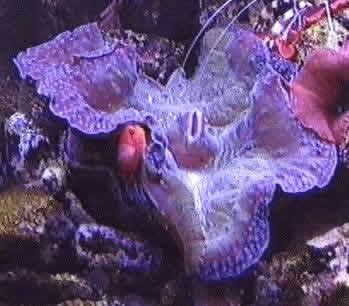
The other day, for instance, the restaurant where I work sponsored a free day at the zoo, so I hopped a bus and spent the day wandering among the animals. Being alone, I felt free to go at my own pace, and I soon realized that my attention was expansive (too expansive, perhaps, to be tolerated by a friend if one had been tagging along). In the small aquarium within the zoo, I spent a good half hour watching a small tank of giant clams--which, let me tell you, don't move very much--just waiting for a fish to brush by so that I could watch this impossibly responsive creature pull into itself. Eventually, when a fish swam just a bit too close, I watched a clam larger than my head suddenly snap shut. This sounds amazingly boring, and to most people I'm sure it would have been. But for me, it was a moment of poetry--a moment in which something we so often overlook as dull and unresponsive as rock suddenly reveals a thriving lifeforce within it--a moment that was only possible because of the surrounding stillness and my willingness to wait.

For me, this is the "message" that poetry is uniquely apt at delivering. The structure of the text, its stanzas and line breaks, and the elevation of every word, every breath or pause between sound and the each sound itself--expresses this type of attention to tension, to the universal expressed unexpectedly within the concrete--that movement of sudden life within the surrounding stillness, and the echo of that movement in the core of our own being. So what is my message?

To pay attention. To recognize the ridiculous sacred lurking in every corner of the everyday. To clear a space of stillness--to break up the stream of chatter and obligation--and allow the emptiness, whether it is on the page or in the world, to bring moments of poetry into focus.

Monday, July 9, 2007

On Necessary Artifice

Rarely will I post an excerpt, poem or tidbit without any sort of context or commentary of my own. But I've had an emotionally exhausting day. I will leave it to someone more respected and more widely read to explain why.

Whoever guesses something of the consequences of any deep suspicion, something of the chills and fears stemming from isolation, to which every man burdened with an unconditional difference of viewpoint is condemned, this person will understand how often I tried to take shelter somewhere, to recover from myself, as if to forget myself entirely for a time (in some sort of reverence, or enmity, or scholarliness, or frivolity, or stupidity); and he will also understand why, when I could not find what I needed, I had to gain it by force artificially, to counterfeit it, or create it poetically. (And what have poets ever done otherwise? And why else do we have all the art in the world?) What I always needed most to cure and restore myself, however, was the belief that I was not the only one to be thus, to see thus--I needed the enchanting intuition of kinship and equality in the eye and in desire, repose in a trusted friendship; I needed a shared blindness, with no suspicion or question marks, a pleasure in foregrounds, surfaces, what is near, what is nearest, in everything that has color, skin, appearance. Perhaps one could accuse me in this regard of some sort of "art," various sorts of finer counterfeiting: [...]. But even if this all were true and I were accused of it with good reason, what do you know, what could you know about the amount of self-preserving cunning, or reason and higher protection that is contained in such self-deception--and how much falseness I still require so that I may keep permitting myself the luxury of my truthfulness?...Enough, I am still alive.

- Nietzsche, from "Human, All Too Human"

Saturday, July 7, 2007

A Shrine of Books

Some of you may remember a post of mine back in April on Impromptu Book Altars as a unique, bookworm take on the idea of inconspicuous travel altars (with not a little art involved). In case my dear readers had any more doubts about just how far my love of books extends, I now present, for your viewing pleasure, a temporary shrine devoted to the Harry Potter book series, in honor of the publication of the seventh and final book (and, of course, the fifth HP movie coming out in a few days).


This idea was inspired by LibraryThing.com, which occasionally has these neat bookpile contests. Of course, I jumped at the chance to participate in their current Harry Potter BookPile contest, building a temporary "shrine" in my bookcase that incorporated my HP books, along with some "wizard and wizardry books" and magical objects of my own. Just a fun idea, I thought. So here are some photos that I submitted to the contest (I think I made the very first entry!). Check out the Flickr tag page for other entries, and the LibraryThing blog post for information on how to enter the contest for yourself.


I only have a crappy camera-phone, which I guess means I'm sure not to win the contest, but still... I thought it was a cute idea. So here are all my original hardback Harry Potter books, plus some of my other magic books and magical items.


Close-up of the left side, with all the Harry Potter books, plus a leather journal, stone gazing orb, bell, various bottles of herbs, stones and oils, dried flowers in a blue urn, half-burnt candle in candleholder, a small hand-carved wooden box, and of course, my wand (hand-turned rosewood).


Close-up of the right side. Books include: The Spell of the Sensuous, by David Abram; Applied Magic, by Dion Fortune; Practical Solitary Magic, by Nancy B. Watson; Real Magic, by Isaac Bonewits; Taking Up the Runes, by Diane L. Paxson; Exploring Scrying, by Ambrose Hawk; Modern Magick, by Donald M. Kraig; Herbal Rituals, by Judith Berger; and Magical Aromatherapy, and Encyclopedia of Magical Herbs, both by Scott Cunningham. Plus, a bag of mixed herbs and a small statue of a black cat.

Thursday, July 5, 2007

Why Birds Sing

I'm currently reading a book called Why Birds Sing, by David Rothenberg, which is... all right. Full of interesting tidbits and facts, but the writing style itself is a bit haphazard and argumentative.

Although he certainly cites scientific studies a great deal, Rothenberg obviously has no affinity or knack for the nuances of scientific thought, which leads him to continually bring up conclusions and observations that he then dismisses as being so obviously insufficient to explain the beauty of birdsong. As a reader who likes the "natural sciences" and doesn't think they claim to explain beauty and art away, I sometimes wish he'd done a deeper investigation into some of the ideas. For instance, when talking about complex plumage and birdsong as ways of attracting mates, he refers to the scientific theory of the "handicap," that animals with physical attributes or behaviors that might seem detrimental to survival flaunt these things as a way of saying, "Hey, look, I have a ridiculously long and brightly-colored tail, and I'm still better than all the other males at escaping predators--so I must be extra strong and fast." Rothenberg then goes on to say that this theory is insulting and demeaning as a way of explaining birdsong--that it is simply unsatisfying to see natural beauty and music as "handicaps" of an animal.

But personally, I think of the skylark--a bird which is unique in its ability to sing while in flight. Singing takes so much energy that most birds cannot do both. While beig pursued by a predator, the skylark sings loudly and marvelously, as a way of declaring that it is strong and healthy and that it can afford to waste energy singing even when fleeing for its life. This is an example of the "handicap" theory--you would think natural selection would favor birds that conserve their energy and escape predators more efficiently--but to me, it also seems a perfect and moving example of beauty for its own sake and the stubborn triumph of song. Rothenberg is silent on the possibility that beauty-as-handicap is itself an inspiring idea.

In any case, thus far the topics that Rothenberg handles best--and what I find most fruitful and fascinating about the book--is the relationship between birdsong and human language, whether that language is poetry or music. The book is full of excerpts of poetry inspired by birds and their singing, as well as examples of attempts to transliterate or transcribe birdsong into musical notational or pronounceable syllables for the human tongue. Many of these border on poetry or, in the case of old sonograms, visual art. For these bits alone, the book was worth the price (and, I have a feeling, the audio CD of improvisational musical performances of the author with live birds may also prove rewarding).

One new poem I have discovered through this book is "The Singing," by Kim Addonizio. The excerpt included in Why Birds Sing is as follows:

I could say it's the bird of my loneliness
asking, as usual, for love, for more anyway than I have, I could as easily call it
grief, ambition, knot of self that won't untangle, fear of my own heart. All
I can do is listen to the way it keeps on, as if it's enough just to launch a voice
against stillness, even a voice that says so little, that no one is likely to answer
with anything but sorrow, and their own confusion.

A reading of the full poem is available here. Reading this excerpt reminds me of a poem that I wrote after attending a concert by Steve Vai and listening to an encore performance of his largely improvisational, meditative hymn, "For the Love of God" (a new, orchestral version available on Vai's MySpace page)--the same sense of the ever-deepening community of sound which has no clearly-defined "meaning" in the linguistic sense. Strangely enough, although I was very moved by Addonizio's poem on the page, I didn't much like her reading of it--her voice carries a kind of forced lilt that many poets adopt when performing their poetry which, in this case, seemed to trivialize or downplay the musicality of the birdsong she was recalling. Still, an excellent poem.

Tuesday, July 3, 2007

Eight Random Things

Tagged by both Nettle and Mahud for the "Eight Random Things About Me" meme (no, I didn't forget), with the following rules:
  • Post eight random facts about yourself.
  • Tag eight other bloggers (hopefully those who haven’t been tagged before).
  • Post these rules.

Well, long over-due I suppose, but here goes (in no order, significant, alphabetical, chronological or otherwise).

[1] I'm a vegetarian. Articles like this one remind me why this choice is based, in part, on health concerns. Other than health, there are several other reasons for my choice. It is, in part, a spiritual discipline, which requires me to pay closer attention to the things that go into my body and how they affect me physically, as well as their variety and preparation; this is an aspect of my "embodied" spiritual life, and since becoming a vegetarian I've noticed my whole relationship to food and mealtimes has evolved into an important daily reminder of interconnection and gratitude. I also have my moral and political reasons--objecting to violence against living creatures, the deforestation of land and damage to the environment, the over-consumption of meat products at the expense of making staple plant foods more widely available to the starving millions of the world, animal abuses and the human (in particular, workers') rights violations that take place in the slaughterhouses and meat packaging plants across the country, the ridiculously large subsidies provided to the meat industry and their continual fight against accurate and informative labeling of meat products in the name of the "free market" (please!), etc. Of course, since factory-farming, environmental destruction, wasteful packaging and shipping are all issues for vegetation--and because plants are alive as much as animals and so death becomes inevitable and should, at least, be treated with dignity and gratitude, with as little impact to the fabric of the whole as possible--I have slowly been switching over to a largely organic and/or local vegetarian diet (as much as my budget and other factors allow). In my opinion, every little bit helps, and as long as I'm young and healthy, I should do what I can.

[2] I graduated valedictorian of my college class, with a B.A. in Philosophy & Comparative Religious Studies, a minor in creative writing, and Interdisciplinary Distinguished Honors for a thesis I wrote my senior year on the ritual aspects of the creative writing process. While in college, I earned several grants for research projects (one of which was focused on Neopaganism and other contemporary nature-based spiritual traditions), and helped my advisor to edit a book he was working on about some obscure pamphlet propaganda in Germany during the Reformation (the kind of book no one will ever read, probably, but he tells me that I'm featured heavily in the "Acknowledgments" section). Now I'm working as a waitress. Yeah, I know. All those college administrators hoping to be able to brag about me have been hugely disappointed. In any case, I don't think it's bragging to say that I am quite an intelligent and hard-working person (the hard-working, I think, being the more important of the two). It also goes to show that too much thoughtfulness can actually hinder a "normal career path," since one reason I work as a waitress is because I simply can't bear to have any other full-time job doing something I'm not truly passionate about. Being a part-time waitress earns me the minimum money I need to get by while giving me plenty of time to pursue my real passion, which is...

[3] I write poetry. My parents once told me the story that, when I was little, long before I could read or write, I would sit sometimes for hours with a ream of paper and a handful of crayons, scribbling lines across each page. When my parents asked me what I was doing, I'd declare, "I'm writing!" I'm not sure where I got this idea, of "being a writer," but it seems to be in my blood. It's the only thing I've ever wanted to do. I have a cousin who only ever wanted to be a doctor (in part because she developed diabetes when she was very young, as did her brother, and so was aware of health and medical issues from early on)--she's about to graduate medical school in August and already has two job offers, with a starting yearly salary of about $70,000. Me? I've always wanted to be a writer, and more specifically a poet. No starting salaries in the upper-middle-class range for me, my friends. Still, I'd like to think that, even if I die in obscurity (which I hope won't happen!), my poetry may one day be good enough to earn me a solid posthumous reputation, and perhaps change some readers' lives the way my life has been amazingly transformed by some of my favorite writers. It's hard to conceive of the spiritual, community impact that I hope my poetry will have, especially when I have to struggle with constant submissions and rejections on a daily basis, competing against that ever-growing flood of other people out there all trying to be "writers" and "poets" even if only as a hobby. I can't count the number of people I know who are "writing a book"--it seems to be the thing to do when you're unhappy with your nine-to-five office job and think something is wrong in politics or religion, or something is cute about your dog. That probably comes across as sounding pretty harsh. My point, though, is that when creative writing is treated as a commodity rather than an art form, and the market is flooded with anyone trying to actually make a living from that product, the question begs to be asked: Can poetry matter? I wrote an essay about this idea back in September, 2005, in terms of how I conceive of audience, versus a "community of readers," and how that shapes the potential and impact of a work of poetry-as-art.

[4] Speaking of philosophy (sort of), I am, philosophically speaking, anti-capitalist. It seems strange that, although in many ways I identify with the mainstream of "liberal capitalism," as developed by thinkers like Hobbes and Locke, I'm also keenly aware of its drawbacks. The main flaw of this particular political philosophy is that it is based on an intrinsically silly assumption: that, in a "State of Nature," we are all isolated individuals, and that most conflict arises from scarcity of goods or security, which can be either rationally negotiated (Locke) or played upon to induce fear that will guarantee law-abiding citizens (Hobbes). This core philosophical concept has been elaborated on by various other thinkers, such as Hegel, to support a political framework entrenched in a notion of "progress," defined in a very particular way. Of course, saying that you are anti-capitalist and not all that thrilled with this unquestioning devotion to "progress" is akin to saying you're anti-American or even anti-democracy these days (although, the best known competing political philosophy, Communism, is based on the same fundamental fallacy of progress and individualism-resolved-through-constructed-community-identity, so you shouldn't be worrying that I'm secretly communist, either). Anyway, this is all very boring to you readers, I'm sure. So let me just say that I think insisting that Capitalism is the best and/or only economic system that works (even if it isn't perfect) is a bit foolhardy, assuming certain artificial limits for the human imagination and the capacity for human communities to adapt and reinvent themselves. A person back in feudal times (lord or serf, but most especially lord) would have made the same claims about their system of government and economy--hey, it's not perfect, but it works for us and keeps the peace, relatively well at least. Still, other options are possible, and one upside of the often abstract and tedious ponderings of philosophers today is that the more insight we have into "human nature," social and cultural possibilities and such, the more knowledge and understanding we have on which to base the future adaptations and reshapings of community when the current system inevitably collapses under its own weight (as every system in the past has done, and most systems will probably continue to do--such is life ;).

[5] I'm unnecessarily verbose. Except, of course, when drawing attention to that fact.

[6] I'm a virgin. Woah! This suddenly got intensely personal, didn't it?! Well, calm down. It's funny that in this sex-crazed culture, people have very strange reactions to the simple idea of not having sex, even after reaching mature adulthood. I'll tell you a secret: I'm not the only virgin I know, most of the virgins I know are males, none of them are scary-fundamentalist, living-in-fear-of-a-peeping-tom-deity Christians, and I also know a few people who, after some initial sexual experiences, have decided enough's enough, and have returned to waiting hopefully for a committed, mature relationship with a long-term partner. Maybe it's just the kind of friends I have, but this all seems very normal to me. I am in no way embarrassed by having not had sex. Furthermore, my understanding of virginity extends far beyond mere sexual intercourse, and in some ways stems from my whole-hearted embrace of feminism. As a former Catholic, one important female role model throughout my childhood was the Virgin Mary--whose "yes" in assent to the erotic and procreative union with God through the Holy Spirit is still, for me, an amazing statement about "womyn power." Plenty of Pagans point to the virginity of Mary as an example of unhealthy and unrealistic expectations for females within Christianity. However, the theological doctrine of the virginal conception of Jesus, and the continual virginity of Mary even after she conceived and bore other children by her husband, Joseph (no, this is not scandalous, Jesus' siblings are referenced in the Bible itself), challenged any thinking Catholic to consider exactly what "virginity" means. Instead of assuming that virginity was merely limited to the physical, biological side of reality, it took on a psychological and spiritual meaning. I slowly came to understand that being "virginal" is, in some sense, to be complete within oneself, to seek a personal, spiritual integrity that resides in innocence and openness to the Divine and to relate to others as similarly whole, unique and equal, rather than allowing relationships to be based on a paranoid or desperate sense of isolation that can result just as much from lust and physical promiscuity as from physical virginity. We all know women who call themselves feminists, and yet use their feminism to justify treating sex as a form of manipulation and power-play as much as any patriarchal male would, instead of a trusting communion between equals that echoes on all levels of being. In any case, I have had enough physical intimacy in my life to sense the potential for such a communion through the sexual act, and my virginity is not so much a decision to abide by certain religious "rules" about pre-marital sex, as it is a daily choice to respond with innocence, openness and trust to those who inspire innocence, openness and trust, and not to force intimacy where it cannot thrive. Here endeth the embarrassing sex talk.

[7] Hmm... I'm not sure anything can top that last one. I think I'll conclude with an entirely mundane and frivolous fact: I have very bad eye-sight. Without my glass, I can't even see the big E on the eye chart--I'm just looking at a big square of white with some patches of occasional darker-gray. Yes. It's that bad. I used to wear contacts, but they irritated my eyes and, in some ways, I like being able to take my glasses off whenever I like (plus, the eye doctor told me glasses are actually healthier for your eyes, since there's less worry about dirt, lack of air and moisture, and whatnot). Also, I have such bad eye-sight that, when I take my glasses off, there's no point in squinting, since it doesn't help--instead, I've trained myself to navigate familiar areas without being able to see, which means I can walk around my entire apartment in the dark without banging into anything. Of course, that might also be because I'm rather tidy and I don't let people come in and just move things around willy-nilly or leave objects on the floor. Still, the long hallway in my apartment has a little kink in it right near the bathroom, which makes it fun to navigate when you're especially tipsy and trying to get to bed.

[8] "But wait," you say (because you are, after all, an attentive reader), "this meme is supposed to include eight things, and Ali just said that number seven was her last one. What's up with that?" I'll tell you what's up. I've run out of ideas. I can't think of anything else that I can imagine as being even remotely interesting (and that isn't already covered by the very nature of this blog). So, instead, I'm leaving [8] wide open for questioning--ask me anything at all, any random question that you'd like to know as my final "thing about me," and I'll answer it. (Yes, this is in part a clever ploy to get my comments back up.)

Tag: I'm going to do the same thing for "tagging" eight more people. I figure I'm so late in the game on this meme, almost everyone's done it; plus, I don't know who reads this blog (and last time I tried to tag people for a meme, I don't think a one of them ended up doing it!). So here's the deal: if you want to do your own "Eight Random Things," feel free to add a link to your post in a response to this one. Same thing goes if you've already done the meme and just want to share a link to it. Sound good? Good. :)